What can employers do to provide a more inclusive work environment for Muslim staff?

Employment Law News

What can employers do to provide a more inclusive work environment for Muslim staff?

With Ramadan starting this evening, BDBF Senior Associate, Theo Nicou considers the Muslim Council of Britain’s Ramadan Guide which provides recommendations on what employers can do to provide a more inclusive work environment for Muslim staff.


What adaptations can employers implement for Ramadan?

  • Be open to having a discussion with employees who are fasting but don’t assume that all employees want to be treated differently because they are fasting. 
  • Consider letting staff finish earlier if they are working through any break times.
  • Be accommodating to annual leave requests, in particular for employees wanting time off to celebrate Eid ul Fitr festival, marking the end of the holy month of Ramadan.
  • Be flexible in allowing employees to have breaks for afternoon prayers and, if possible, provide a prayer or quiet space.


What cultural considerations should employers be aware of and what everyday adaptations can they make?

  • Employers should be aware of cultural differences around handshaking and direct eye contact. The placing of a hand on heart (instead of a handshake between genders) in greeting is practiced in many Muslim communities and seen as a highly respectful act, as is Muslim men lowering their gaze when interacting with women, another marker of utmost respect and means of maintaining a modest disposition.
  • Take into consideration how dress codes and uniforms can incorporate headscarves should a Muslim member of staff wear it and provide hair nets or masks if there are health and safety considerations regarding beards.
  • Look into including halal and/or kosher (as it is also permissible for Muslims to eat) food and vegetarian dishes in canteens or whenever food or snacks are provided for staff.
  • Offer a range of activities designed to appeal to everyone, dedicated to building rapport between staff from different backgrounds. Muslim staff may not socialise in pubs, for example, so consider events in the social calendar that will accommodate for this difference in sensibilities.


Closing thoughts

Inclusivity is key to ensuring a happy and productive workforce. A number of the above practical changes are easy to implement but could go a long way to foster a more welcoming work environment for Muslim staff.

BDBF is a leading law firm based at Bank in the City of London specialising in employment law. If you would like to discuss any issues relating to the content of this article, please contact Theo Nicou (theonicou@bdbf.co.uk) or your usual BDBF contact.

[/et_pb_text][/et_pb_column][/et_pb_row][/et_pb_section][et_pb_section fb_built=”1″ _builder_version=”3.26.6″][et_pb_row _builder_version=”3.26.6″][et_pb_column type=”4_4″ _builder_version=”3.26.6″][/et_pb_column][/et_pb_row][/et_pb_section]


Proposed Bill May Change Workplace Sexual Harassment Law

[et_pb_section fb_built=”1″ _builder_version=”3.0.100″ background_image=”http://davidk423.sg-host.com/wp-content/uploads/2017/09/bdbf_final-stages-1-4-1.jpg” custom_padding=”|||” global_module=”2165″ saved_tabs=”all” global_colors_info=”{}”][et_pb_row _builder_version=”4.16″ min_height=”66.4px” custom_padding=”50px||||false|false” global_colors_info=”{}”][et_pb_column type=”4_4″ _builder_version=”4.16″ custom_padding=”|||” global_colors_info=”{}” custom_padding__hover=”|||”][et_pb_text _builder_version=”4.16″ _dynamic_attributes=”content” text_font=”|700|||||||” text_font_size=”27px” background_layout=”dark” custom_margin=”0px|||” custom_padding=”0px|||” global_colors_info=”{}”]@ET-DC@eyJkeW5hbWljIjp0cnVlLCJjb250ZW50IjoicG9zdF90aXRsZSIsInNldHRpbmdzIjp7ImJlZm9yZSI6IiIsImFmdGVyIjoiIn19@[/et_pb_text][et_pb_text _builder_version=”4.16″ _dynamic_attributes=”content” _module_preset=”default” text_text_color=”#FFFFFF” global_colors_info=”{}”]@ET-DC@eyJkeW5hbWljIjp0cnVlLCJjb250ZW50IjoicG9zdF9kYXRlIiwic2V0dGluZ3MiOnsiYmVmb3JlIjoiIiwiYWZ0ZXIiOiIiLCJkYXRlX2Zvcm1hdCI6ImRlZmF1bHQiLCJjdXN0b21fZGF0ZV9mb3JtYXQiOiIifX0=@[/et_pb_text][/et_pb_column][/et_pb_row][/et_pb_section][et_pb_section fb_built=”1″ admin_label=”section” _builder_version=”4.16″ global_colors_info=”{}”][et_pb_row admin_label=”row” _builder_version=”4.16″ background_size=”initial” background_position=”top_left” background_repeat=”repeat” global_colors_info=”{}”][et_pb_column type=”4_4″ _builder_version=”4.16″ custom_padding=”|||” global_colors_info=”{}” custom_padding__hover=”|||”][et_pb_text _builder_version=”4.19.1″ text_orientation=”justified” use_border_color=”off” global_colors_info=”{}”]

In a recent article for Law360, BDBF’s Gareth Brahams and Amanda Steadman discuss the new laws on the horizon that will require employers to take steps to protect staff from sexual harassment and could lead to employers being held liable for third-party harassment of workers.

Please click the image below to view the PDF:

Brahams Dutt Badrick French LLP are a leading specialist employment law firm based at Bank in the City. If you would like to discuss any issues relating to the content of this article, please contact Gareth Brahams (GarethBrahams@bdbf.co.uk) or Amanda Steadman (AmandaSteadman@bdbf.co.uk) or your usual BDBF contact.

[/et_pb_text][/et_pb_column][/et_pb_row][/et_pb_section][et_pb_section fb_built=”1″ _builder_version=”4.16″ global_colors_info=”{}”][et_pb_row _builder_version=”4.16″ global_colors_info=”{}”][et_pb_column type=”4_4″ _builder_version=”4.16″ global_colors_info=”{}”][/et_pb_column][/et_pb_row][/et_pb_section]

Competitive interview processes have the potential to disadvantage disabled candidates

[et_pb_section fb_built=”1″ _builder_version=”3.0.100″ background_image=”http://davidk423.sg-host.com/wp-content/uploads/2017/09/bdbf_final-stages-1-4-1.jpg” custom_padding=”|||” global_module=”2165″ saved_tabs=”all” global_colors_info=”{}”][et_pb_row _builder_version=”4.16″ min_height=”66.4px” custom_padding=”50px||||false|false” global_colors_info=”{}”][et_pb_column type=”4_4″ _builder_version=”4.16″ custom_padding=”|||” global_colors_info=”{}” custom_padding__hover=”|||”][et_pb_text _builder_version=”4.16″ _dynamic_attributes=”content” text_font=”|700|||||||” text_font_size=”27px” background_layout=”dark” custom_margin=”0px|||” custom_padding=”0px|||” global_colors_info=”{}”]@ET-DC@eyJkeW5hbWljIjp0cnVlLCJjb250ZW50IjoicG9zdF90aXRsZSIsInNldHRpbmdzIjp7ImJlZm9yZSI6IiIsImFmdGVyIjoiIn19@[/et_pb_text][et_pb_text _builder_version=”4.16″ _dynamic_attributes=”content” _module_preset=”default” text_text_color=”#FFFFFF” global_colors_info=”{}”]@ET-DC@eyJkeW5hbWljIjp0cnVlLCJjb250ZW50IjoicG9zdF9kYXRlIiwic2V0dGluZ3MiOnsiYmVmb3JlIjoiIiwiYWZ0ZXIiOiIiLCJkYXRlX2Zvcm1hdCI6ImRlZmF1bHQiLCJjdXN0b21fZGF0ZV9mb3JtYXQiOiIifX0=@[/et_pb_text][/et_pb_column][/et_pb_row][/et_pb_section][et_pb_section fb_built=”1″ admin_label=”section” _builder_version=”4.16″ global_colors_info=”{}”][et_pb_row admin_label=”row” _builder_version=”4.16″ background_size=”initial” background_position=”top_left” background_repeat=”repeat” global_colors_info=”{}”][et_pb_column type=”4_4″ _builder_version=”4.16″ custom_padding=”|||” global_colors_info=”{}” custom_padding__hover=”|||”][et_pb_text _builder_version=”4.19.1″ text_orientation=”justified” hover_enabled=”0″ use_border_color=”off” global_colors_info=”{}” sticky_enabled=”0″]

In the recent case of Hilaire v Luton Borough Council, the EAT held that a competitive interview process could disadvantage someone suffering from depression, meaning the duty to make reasonable adjustments would be triggered.  However, it was also held that it will not necessarily be reasonable to dispense with the interview process altogether.

What happened in this case?

The Claimant suffered from depression and arthritis which caused him to suffer from lethargy, lack of motivation, problems with memory and concentration, persistent low mood, social disengagement and difficulty with normal social interaction.  The employer was aware of the Claimant’s disability.

A redundancy situation arose, and the Claimant was invited to apply for a role within the new structure.  The employer gave the Claimant extra time to prepare his application and offered him support in doing so.  As part of the process, the Claimant was required to attend an interview.  He said he could not attend the interview on the basis that he was unwell.  The employer asked when he would be able to attend, and he did not reply.

The employer wished to resolve the recruitment process.  It had already interviewed 13 candidates who were awaiting a response.  The employer considered whether there was any other way of testing suitability other than an interview but decided there was not as it would mean treating candidates inconsistently.  Therefore, it set a deadline for the Claimant’s interview to take place. 

Three days before the new interview deadline, the Claimant said he would not attend as he was unwell.  However, it is worth nothing that a few days later he was well enough to attend an internal appeal hearing regarding a warning he had received.  He also wrote to the employer a few days later stating that even if he had not been unwell, he would not have attended the interview as he had lost confidence in his employer.

The Claimant was dismissed by reason of redundancy.  He brought a claim alleging that the employer had failed to make a reasonable adjustment to the recruitment process.   He argued that the requirement to attend an interview caused him a substantial disadvantage as a disabled person suffering with depression.  In his view, postponing the interview was not sufficient to remove the disadvantage.  Instead, the employer should have dispensed with the interview altogether and slotted him into the role.

The Employment Tribunal dismissed claim, finding that that the Claimant could have engaged in the interview process, but had chosen not to do so.   This meant that the Claimant was not disadvantaged by his disability in the interview process.   The Claimant appealed.

What was decided?

The EAT held that a competitive interview process (in terms of both attendance and performance) could clearly cause substantial disadvantage to a disabled person suffering with the problems that the Claimant had, thereby triggering the need to make reasonable adjustments.

However, in this case, the EAT agreed with the Tribunal that the Claimant’s disability had not, in fact, caused him to suffer a disadvantage.  The Claimant’s non-attendance at the interview was nothing to do with his disability.  Rather, he did not attend out of personal choice (because he had lost confidence in his employer).  The fact that he had been able to attend the disciplinary appeal meeting at around the same time underlined this point.   

Although the claim failed on causation grounds, for completeness, the EAT went on to consider the issue of the reasonableness of adjustments.  In the EAT’s view, the only adjustment that could have alleviated the potential disadvantage in this case, was to have slotted the Claimant into the role without an interview.  However, the EAT concluded that this would not have been reasonable as it would have disadvantaged other candidates.  The EAT noted that “making an adjustment is not a vehicle for giving any advantage over and above removing the particular disadvantage”.  It may be a reasonable adjustment in certain circumstances, but not where 13 other candidates were vying for the role and had already been through a competitive interview.  In fact, in this case, there were no reasonable adjustments that could have been made.

What are the learning points for employers?

Although the Claimant lost, the important takeaway for employers is that it was found that a competitive interview process could substantially disadvantage a person with depression.  Equally, this could be the case for people with other disabilities which would affect the ability to attend and/or perform well in an interview, for example, chronic fatigue syndrome, Long Covid or severe menopausal symptoms.

Where a worker is disadvantaged in this way, the duty to make reasonable adjustments will be triggered and employers must be proactive in considering what adjustments might help.  There are a range of possible adjustments that might be suitable depending on the case, for example, conducting a shorter interview and/or conducting the interview remotely. 

In some cases, slotting into the role without an interview might be a reasonable adjustment, but this will not necessarily be the case.  The wider impact of a proposed adjustment will be relevant to whether or not it is reasonable.

Hilaire v Luton Borough Council

Brahams Dutt Badrick French LLP are a leading specialist employment law firm based at Bank in the City. If you would like to discuss any issues relating to the content of this article, please contact Amanda Steadman (AmandaSteadman@bdbf.co.uk) or your usual BDBF contact.

[/et_pb_text][/et_pb_column][/et_pb_row][/et_pb_section][et_pb_section fb_built=”1″ _builder_version=”4.16″ global_colors_info=”{}”][et_pb_row _builder_version=”4.16″ global_colors_info=”{}”][et_pb_column type=”4_4″ _builder_version=”4.16″ global_colors_info=”{}”][/et_pb_column][/et_pb_row][/et_pb_section]


Settlement offer alleged to be an act of victimisation was without prejudice and not unambiguously improper

[et_pb_section fb_built=”1″ _builder_version=”3.0.100″ background_image=”http://davidk423.sg-host.com/wp-content/uploads/2017/09/bdbf_final-stages-1-4-1.jpg” custom_padding=”|||” global_module=”2165″ saved_tabs=”all” global_colors_info=”{}”][et_pb_row _builder_version=”4.16″ min_height=”66.4px” custom_padding=”50px||||false|false” global_colors_info=”{}”][et_pb_column type=”4_4″ _builder_version=”4.16″ custom_padding=”|||” global_colors_info=”{}” custom_padding__hover=”|||”][et_pb_text _builder_version=”4.16″ _dynamic_attributes=”content” text_font=”|700|||||||” text_font_size=”27px” background_layout=”dark” custom_margin=”0px|||” custom_padding=”0px|||” global_colors_info=”{}”]@ET-DC@eyJkeW5hbWljIjp0cnVlLCJjb250ZW50IjoicG9zdF90aXRsZSIsInNldHRpbmdzIjp7ImJlZm9yZSI6IiIsImFmdGVyIjoiIn19@[/et_pb_text][et_pb_text _builder_version=”4.16″ _dynamic_attributes=”content” _module_preset=”default” text_text_color=”#FFFFFF” global_colors_info=”{}”]@ET-DC@eyJkeW5hbWljIjp0cnVlLCJjb250ZW50IjoicG9zdF9kYXRlIiwic2V0dGluZ3MiOnsiYmVmb3JlIjoiIiwiYWZ0ZXIiOiIiLCJkYXRlX2Zvcm1hdCI6ImRlZmF1bHQiLCJjdXN0b21fZGF0ZV9mb3JtYXQiOiIifX0=@[/et_pb_text][/et_pb_column][/et_pb_row][/et_pb_section][et_pb_section fb_built=”1″ admin_label=”section” _builder_version=”4.16″ global_colors_info=”{}”][et_pb_row admin_label=”row” _builder_version=”4.16″ background_size=”initial” background_position=”top_left” background_repeat=”repeat” global_colors_info=”{}”][et_pb_column type=”4_4″ _builder_version=”4.16″ custom_padding=”|||” global_colors_info=”{}” custom_padding__hover=”|||”][et_pb_text _builder_version=”4.19.1″ text_orientation=”justified” hover_enabled=”0″ use_border_color=”off” global_colors_info=”{}” sticky_enabled=”0″]

In Garrod v Riverstone Management Ltd the EAT has held that a settlement offer made to an employee after she had complained about discrimination, but before she had started legal proceedings, was genuinely without prejudice and not unambiguously improper.  As a result, the employee was unable to refer to the settlement offer in her legal claim. 

What happened in this case?

Ms Garrod was employed by Riverstone Management Ltd as its Company Secretary.  She returned from maternity leave on 15 July 2019 and three months later, on 17 October 2019, she told her manager that she was pregnant with her second child.  On 30 October 2019 she raised a grievance complaining of mistreatment, pregnancy and maternity discrimination and of bullying and harassment by her manager for almost five years.

A week later she was invited to attend a meeting with, Mr Sherrard, an HR and employment law adviser, for a “preliminary discussion”.  Riverstone offered to pay £500 plus VAT towards the cost of a legal adviser to attend the meeting if Ms Garrod wished.  This was declined.  In the end, Ms Garrod attended the meeting with her husband.  Both Ms Garrod and her husband had degrees in law.  Ms Garrod had undertaken some further training to become a solicitor and her husband had a PhD in law.

The meeting took place on 8 November 2019.  After a general discussion about her grievance, Mr Sherrard said he would like to have a “without prejudice” discussion.  It was later found that Ms Garrod understood what this term meant, even though it was not explained to her.  Mr Garrod went on to describe the employment relationship as “fractured” and “problematic” and said the company wished to make an offer to terminate her employment and he put forward the figure of £80,000.  Ms Garrod felt ambushed by this part of the meeting and began to cry.

No agreement was reached.  Instead, the grievance hearing went ahead on 3 December 2019.  On 16 January 2020, the grievance was rejected in its entirety.  Her grievance appeal was also rejected and on 16 March 2020, Ms Garrod resigned and later alleged that she had been constructively unfairly dismissed.  In her claim before the Employment Tribunal, Ms Garrod made reference to the without prejudice meeting with Mr Sherrard.  Riverstone applied to the Tribunal to have those references removed on the basis that this was a privileged meeting.

The Employment Tribunal Judge agreed that the “without prejudice” rule had been engaged because there was an existing dispute between the parties and the communications made at the meeting were part of a genuine attempt to settle that dispute.  Even though litigation had not started by this point, the Judge agreed that the parties had (or might reasonably have) contemplated that litigation would follow if there was no settlement.  Finally, the Judge did not accept that the rule should be disapplied on the basis of any “unambiguous impropriety”.  Therefore, the Judge allowed the application and ordered that the references to the meeting should be removed from Ms Garrod’s claim.  Ms Garrod appealed.

What was decided?

Ms Garrod argued that the Employment Tribunal Judge had been wrong to find that there was an existing dispute between the parties which engaged the without prejudice rule.  She relied on the earlier decision in BNP Paribas v Mezzoterro, where it was held that the fact an employee has raised a grievance did not necessarily mean that that the parties were in “dispute”. 

The EAT rejected this ground of appeal.  Firstly, the Mezzoterro decision did not mean that an employee who had raised a grievance could never be in dispute with their employer, rather, it was not necessarily the case.  In this case, the Tribunal Judge was entitled to conclude that the dispute was already in existence at the time she raised her grievance and at the time of the meeting.  In Mezzoterro the without prejudice meeting was at the very heart of her claim i.e. her sex discrimination and victimisation claims were based on the allegation that her employer sought to terminate her employment after she had raised a grievance about discriminatory treatment.   By contrast, Ms Garrod did not rely on the without prejudice meeting as an unlawful act giving rise to a separate claim.  Instead, the reference to the meeting was “part of the narrative making that the point that Ms Garrod’s grievance was not dealt with to her satisfaction”. 

Ms Garrod also argued, that even if the parties were in dispute, it did not necessarily mean that litigation was in prospect.  The EAT also rejected this, noting that the references made in the grievance to the infringement of legal rights and Acas Early Conciliation were “clear signposts to the possibility of litigation”.  That Ms Garrod had had legal training was a relevant factor as it meant it was reasonable to conclude that she meant what she said. 

The EAT also held that the Employment Tribunal Judge was entitled to conclude that the proposal made at the meeting was genuinely aimed at settlement of the dispute, noting that there was nothing unusual about an employment dispute being settled by an agreement to terminate the employment on financial terms.  This was the case even though Ms Garrod had wanted to remain in her job.

Finally, Ms Garrod argued that Employment Tribunal Judge was wrong not to have found that there was unambiguous impropriety.  She argued that responding to the grievance by proposing termination was an act of victimisation (although, ultimately, she was not permitted to amend her claim to argue this).  The EAT rejected this ground of appeal, noting that the without prejudice rule should be disapplied only in the very clearest of cases of very serious wrongdoing.  The Tribunal Judge was right to conclude that this was not such a case.  The EAT concluded that making a settlement offer which could, on one view, provide a clue to a party’s discriminatory attitudes fell far below the threshold needed to disapply the without prejudice rule.

What are the learning points for employers?

This is a useful decision for employers as it highlights that parties may be in a dispute once a grievance has been brought, meaning that a without prejudice discussion may be possible.  After the Mezzoterro decision, there was some concern that the raising of a grievance would not be sufficient to engage the without prejudice rule. 

However, employers should be careful not to assume that a grievance always means you are in dispute.  It will depend on the specific facts.  Here, the fact that the grievance outlined the legal claims and referred to Acas Early Conciliation all tended towards there being a dispute that would end up in litigation.  Further the fact that Ms Garrod was a sophisticated claimant with legal knowledge meant that it was fair to assume she meant what she said in her grievance.

The decision also highlights that, once engaged, the without prejudice rule will only be disapplied in limited circumstances.  An allegation that a settlement offer betrays an employer’s discriminatory attitudes is not enough.  However, it is worth remembering that Ms Garrod’s attempt to add a victimisation claim based on the settlement meeting itself was refused by the Employment Tribunal.  This meant that her references to the meeting were merely part of the general “narrative” of her claim and she was not harmed by having to remove references to it.  In a different case, a claimant’s claim may be rest more squarely on what happened at a settlement meeting (as was the case in Mezzoterro) and there would be a greater risk of the rule being disapplied. 

A helpful decision overall, but employers should still take care when seeking to have early settlement discussions before litigation is in clearly in prospect.  Although there is the ability to have “pre-termination settlement discussions” under section 111A of the Employment Rights Act 1996, such discussions are inadmissible in ordinary unfair dismissal claims only.  Therefore, it is better to ensure that the without prejudice label will stick wherever possible, since this will protect the communications from disclosure in any proceedings.  We would recommend seeking legal advice where you are unsure whether the rule will be engaged. 

Garrod v Riverstone Management Ltd

Brahams Dutt Badrick French LLP are a leading specialist employment law firm based at Bank in the City. If you would like to discuss any issues relating to the content of this article, please contact Amanda Steadman (AmandaSteadman@bdbf.co.uk) or your usual BDBF contact.

[/et_pb_text][/et_pb_column][/et_pb_row][/et_pb_section][et_pb_section fb_built=”1″ _builder_version=”4.16″ global_colors_info=”{}”][et_pb_row _builder_version=”4.16″ global_colors_info=”{}”][et_pb_column type=”4_4″ _builder_version=”4.16″ global_colors_info=”{}”][/et_pb_column][/et_pb_row][/et_pb_section]


Right to request flexible working to become a Day 1 employment right

[et_pb_section fb_built=”1″ _builder_version=”3.0.100″ background_image=”http://davidk423.sg-host.com/wp-content/uploads/2017/09/bdbf_final-stages-1-4-1.jpg” custom_padding=”|||” global_module=”2165″ saved_tabs=”all” global_colors_info=”{}”][et_pb_row _builder_version=”4.16″ min_height=”66.4px” custom_padding=”50px||||false|false” global_colors_info=”{}”][et_pb_column type=”4_4″ _builder_version=”4.16″ custom_padding=”|||” global_colors_info=”{}” custom_padding__hover=”|||”][et_pb_text _builder_version=”4.16″ _dynamic_attributes=”content” text_font=”|700|||||||” text_font_size=”27px” background_layout=”dark” custom_margin=”0px|||” custom_padding=”0px|||” global_colors_info=”{}”]@ET-DC@eyJkeW5hbWljIjp0cnVlLCJjb250ZW50IjoicG9zdF90aXRsZSIsInNldHRpbmdzIjp7ImJlZm9yZSI6IiIsImFmdGVyIjoiIn19@[/et_pb_text][et_pb_text _builder_version=”4.16″ _dynamic_attributes=”content” _module_preset=”default” text_text_color=”#FFFFFF” global_colors_info=”{}”]@ET-DC@eyJkeW5hbWljIjp0cnVlLCJjb250ZW50IjoicG9zdF9kYXRlIiwic2V0dGluZ3MiOnsiYmVmb3JlIjoiIiwiYWZ0ZXIiOiIiLCJkYXRlX2Zvcm1hdCI6ImRlZmF1bHQiLCJjdXN0b21fZGF0ZV9mb3JtYXQiOiIifX0=@[/et_pb_text][/et_pb_column][/et_pb_row][/et_pb_section][et_pb_section fb_built=”1″ admin_label=”section” _builder_version=”4.16″ global_colors_info=”{}”][et_pb_row admin_label=”row” _builder_version=”4.16″ background_size=”initial” background_position=”top_left” background_repeat=”repeat” global_colors_info=”{}”][et_pb_column type=”4_4″ _builder_version=”4.16″ custom_padding=”|||” global_colors_info=”{}” custom_padding__hover=”|||”][et_pb_text _builder_version=”4.19.1″ text_orientation=”justified” hover_enabled=”0″ use_border_color=”off” global_colors_info=”{}” sticky_enabled=”0″]

Last month, we reported on proposals to make a number of reforms to the flexible working regime by way of a Private Members’ Bill.  Since then, the Government has announced it will make the right to request flexible working a Day 1 employment right.

The Employment Relations (Flexible Working) Bill 2022-23 would:

  • remove the requirement for employees to explain in their request what effect they think it will have on their employer;
  • allow employees to make two flexible working requests per year rather than one;
  • require employers to consult with the employee before refusing a request; and
  • reduce the deadline for an employer’s decision on a flexible working request from three months to two months.

You can read more about the proposals in our briefing here.

Earlier this month, the Government’s long-awaited response to a consultation on flexible working reform was published.  In the response, the Government confirmed that it would support the Bill as it progresses through Parliament and also that it will legislate to make the right to request flexible working a Day 1 employment right.  Importantly, this is not a right to have a particular flexible working arrangement, only a right to ask for one. 

The Government’s response also confirms that the eight business grounds for refusing a flexible working request will not be changed.  Nor will employers be obliged to demonstrate in writing that they had considered alternative options before rejecting a request (however, they will be required to consult as above).

What does this mean for employers?

There are no immediate steps for employers to take.  The new Day 1 right will be introduced by way of secondary legislation and will not be included in the Private Members’ Bill.   No indication has been given as to when this will be introduced.

If and when the right to request becomes a Day 1 right, it would be sensible for employers to assume that questions about flexible working patterns will be raised more frequently in job interviews.  Therefore, it would be a good idea to give some preliminary thought to what, if any, flexible working arrangements would work for a particular role. 

Thought should also be given to whether to ask candidates proactively about preferred working patterns (on the basis that it is better to understand whether a request is likely to be made in future than to be taken by surprise).  Of course, care must be taken to ask this question, and respond to the answer given, in a non-discriminatory way.

Employers may want to take advice on any changes to their recruitment practices as a result of this change.

Consultation on Making Flexible Working the Default – Government Response

Brahams Dutt Badrick French LLP are a leading specialist employment law firm based at Bank in the City.  If you would like to discuss any issues relating to the content of this article, please contact Amanda Steadman (AmandaSteadman@bdbf.co.uk) or your usual BDBF contact.

[/et_pb_text][/et_pb_column][/et_pb_row][/et_pb_section][et_pb_section fb_built=”1″ _builder_version=”4.16″ global_colors_info=”{}”][et_pb_row _builder_version=”4.16″ global_colors_info=”{}”][et_pb_column type=”4_4″ _builder_version=”4.16″ global_colors_info=”{}”][/et_pb_column][/et_pb_row][/et_pb_section]


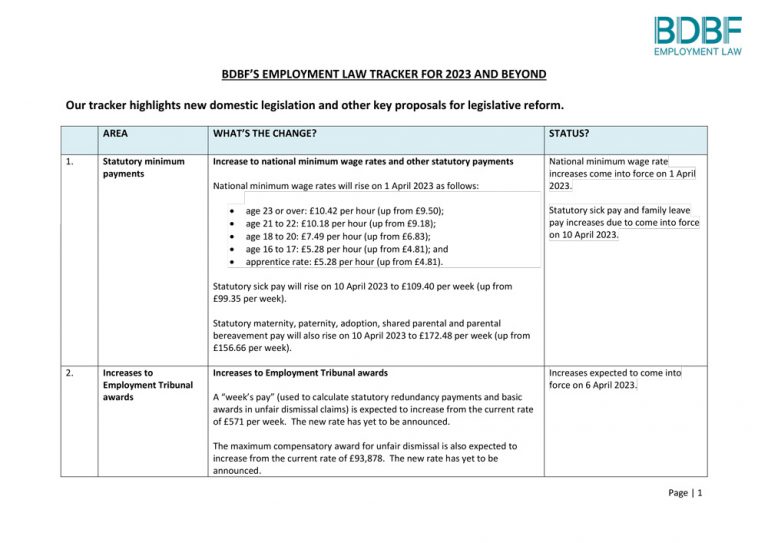
BDBF’S EMPLOYMENT LAW TRACKER FOR 2023 AND BEYOND

[et_pb_section fb_built=”1″ _builder_version=”3.0.100″ background_image=”http://davidk423.sg-host.com/wp-content/uploads/2017/09/bdbf_final-stages-1-4-1.jpg” custom_padding=”|||” global_module=”2165″ saved_tabs=”all” global_colors_info=”{}”][et_pb_row _builder_version=”4.16″ min_height=”66.4px” custom_padding=”50px||||false|false” global_colors_info=”{}”][et_pb_column type=”4_4″ _builder_version=”4.16″ custom_padding=”|||” global_colors_info=”{}” custom_padding__hover=”|||”][et_pb_text _builder_version=”4.16″ _dynamic_attributes=”content” text_font=”|700|||||||” text_font_size=”27px” background_layout=”dark” custom_margin=”0px|||” custom_padding=”0px|||” global_colors_info=”{}”]@ET-DC@eyJkeW5hbWljIjp0cnVlLCJjb250ZW50IjoicG9zdF90aXRsZSIsInNldHRpbmdzIjp7ImJlZm9yZSI6IiIsImFmdGVyIjoiIn19@[/et_pb_text][et_pb_text _builder_version=”4.16″ _dynamic_attributes=”content” _module_preset=”default” text_text_color=”#FFFFFF” global_colors_info=”{}”]@ET-DC@eyJkeW5hbWljIjp0cnVlLCJjb250ZW50IjoicG9zdF9kYXRlIiwic2V0dGluZ3MiOnsiYmVmb3JlIjoiIiwiYWZ0ZXIiOiIiLCJkYXRlX2Zvcm1hdCI6ImRlZmF1bHQiLCJjdXN0b21fZGF0ZV9mb3JtYXQiOiIifX0=@[/et_pb_text][/et_pb_column][/et_pb_row][/et_pb_section][et_pb_section fb_built=”1″ admin_label=”section” _builder_version=”4.16″ global_colors_info=”{}”][et_pb_row admin_label=”row” _builder_version=”4.16″ background_size=”initial” background_position=”top_left” background_repeat=”repeat” global_colors_info=”{}”][et_pb_column type=”4_4″ _builder_version=”4.16″ custom_padding=”|||” global_colors_info=”{}” custom_padding__hover=”|||”][et_pb_text _builder_version=”4.19.1″ text_orientation=”justified” hover_enabled=”0″ use_border_color=”off” global_colors_info=”{}” sticky_enabled=”0″]

Our tracker highlights new domestic legislation and other key proposals for legislative reform. 

Please click the image below to view the full tracker document: 

[/et_pb_text][et_pb_image src=”http://davidk423.sg-host.com/wp-content/uploads/2022/12/2023-Employment-Law-Tracker-FINAL.jpg” title_text=”2023-Employment-Law-Tracker-(FINAL)” url=”http://davidk423.sg-host.com/wp-content/uploads/2022/12/December-newsletter-2023-Employment-Law-Tracker-FINAL.pdf” _builder_version=”4.19.1″ _module_preset=”default” border_width_all=”1px” border_color_all=”#1c6f7a” global_colors_info=”{}”][/et_pb_image][et_pb_text _builder_version=”4.19.1″ text_orientation=”justified” use_border_color=”off” global_colors_info=”{}”]

If you would like further information, or to discuss how to prepare for any of these changes, please contact Amanda Steadman (amandasteadman@bdbf.co.uk) or your usual BDBF contact.


[/et_pb_text][/et_pb_column][/et_pb_row][/et_pb_section][et_pb_section fb_built=”1″ _builder_version=”4.16″ global_colors_info=”{}”][et_pb_row _builder_version=”4.16″ global_colors_info=”{}”][et_pb_column type=”4_4″ _builder_version=”4.16″ global_colors_info=”{}”][/et_pb_column][/et_pb_row][/et_pb_section]


Reflecting on the employment law highlights from 2022

[et_pb_section fb_built=”1″ _builder_version=”3.0.100″ background_image=”http://davidk423.sg-host.com/wp-content/uploads/2017/09/bdbf_final-stages-1-4-1.jpg” custom_padding=”|||” global_module=”2165″ saved_tabs=”all” global_colors_info=”{}”][et_pb_row _builder_version=”4.16″ min_height=”66.4px” custom_padding=”50px||||false|false” global_colors_info=”{}”][et_pb_column type=”4_4″ _builder_version=”4.16″ custom_padding=”|||” global_colors_info=”{}” custom_padding__hover=”|||”][et_pb_text _builder_version=”4.16″ _dynamic_attributes=”content” text_font=”|700|||||||” text_font_size=”27px” background_layout=”dark” custom_margin=”0px|||” custom_padding=”0px|||” global_colors_info=”{}”]@ET-DC@eyJkeW5hbWljIjp0cnVlLCJjb250ZW50IjoicG9zdF90aXRsZSIsInNldHRpbmdzIjp7ImJlZm9yZSI6IiIsImFmdGVyIjoiIn19@[/et_pb_text][et_pb_text _builder_version=”4.16″ _dynamic_attributes=”content” _module_preset=”default” text_text_color=”#FFFFFF” global_colors_info=”{}”]@ET-DC@eyJkeW5hbWljIjp0cnVlLCJjb250ZW50IjoicG9zdF9kYXRlIiwic2V0dGluZ3MiOnsiYmVmb3JlIjoiIiwiYWZ0ZXIiOiIiLCJkYXRlX2Zvcm1hdCI6ImRlZmF1bHQiLCJjdXN0b21fZGF0ZV9mb3JtYXQiOiIifX0=@[/et_pb_text][/et_pb_column][/et_pb_row][/et_pb_section][et_pb_section fb_built=”1″ admin_label=”section” _builder_version=”4.16″ global_colors_info=”{}”][et_pb_row admin_label=”row” _builder_version=”4.16″ background_size=”initial” background_position=”top_left” background_repeat=”repeat” global_colors_info=”{}”][et_pb_column type=”4_4″ _builder_version=”4.16″ custom_padding=”|||” global_colors_info=”{}” custom_padding__hover=”|||”][et_pb_text _builder_version=”4.19.1″ text_orientation=”justified” hover_enabled=”0″ use_border_color=”off” global_colors_info=”{}” sticky_enabled=”0″]

What are the employment law highlights from the last 12 months?  In this briefing, we reflect on some of the most interesting and important cases and developments for employers to remember as the year draws to a close.

COVID-19

  • Employers learnt to live with Covid: on 1 April 2022 the last Covid-related restrictions were withdrawn, and the Government moved to the next phase of the pandemic – “living with Covid”.   In this briefing, we discussed the impact of changes affecting the workplace, including the end of free Covid testing and the removal of the self-isolation requirements and special health and safety rules.
  • Dealing with reluctant returners: as employers learnt to live with Covid, the focus quickly shifted to getting staff back into the workplace. On 26 April 2022, we held a webinar looking at how employers should deal with staff who were reluctant to return to the workplace after working from home during the pandemic.  You can access both the recording of that webinar, together with the slide presentation used on the day, here.
  • The emergence of “Long Covid”: with an estimated 1.8 million people in the UK now suffering with Long Covid, employers also had to learn how to manage staff with the condition.   In this briefing, we considered when Long Covid may qualify as a disability and the steps that employers may need to take as a result. We also looked at Burke v Turning Point Scotland, where it was decided that an employee who had suffered with Covid symptoms for around nine months was  That decision can be contrasted with the outcome in Quinn v Sense Scotland, where it was decided that an employee who was dismissed shortly after contracting Covid was not disabled, even though she did eventually develop Long Covid.
  • Disputes from the height of the pandemic reached the Employment Tribunals: we considered the case of X v Y, where an Employment Tribunal decided that a claimant’s fear of catching Covid, and her belief that she needed to protect herself and her partner from catching it, was not a protected belief for the purposes of discrimination law. We also looked at the case of Rodgers v Leeds Laser Cutting Ltd, where the EAT upheld a decision that it had not been unfair to dismiss an employee who refused to attend work because he was worried about catching Covid and giving it to his vulnerable children.  This decision was appealed, and the Court of Appeal’s decision is expected soon.

Equality

  • Disability and secondments: we discussed the case of Judd v Cabinet Office where the EAT upheld a decision that an employer’s withdrawal of an overseas secondment opportunity on health and safety grounds was not disability discrimination.  The appeal turned on whether the employer had acted disproportionately in withdrawing the opportunity, and the EAT decided that there had been no viable alternatives available to the employer.
  • Breastfeeding, baldness and sex-related harassment: in Mellor v MFG Academies Trust an Employment Tribunal held that a woman suffered harassment related to sex when her employer failed to provide a private room for her to express breastmilk. The employee was forced to express milk in the toilets or her car, which had the effect of creating an unwanted, degrading or humiliating environment for her.  In Finn v The British Bung Manufacturing Company Limited an Employment Tribunal held that calling a male employee “bald” on just one occasion was harassment related to sex.
  • Gender critical belief discrimination: in the long-running and high-profile case of Forstater v CGD Europe and others an Employment Tribunal ruled that an employer directly discriminated against and victimised a worker who lost her role after she had made straightforward statements of her gender critical beliefs on Twitter and in the workplace. In our briefing we outlined the practical steps that employers could take to manage a potential clash of rights between gender critical and trans workers within the workplace.
  • Sham redundancy was discriminatory and subject to Acas Code: we considered the decision in Coulson v Rentplus Ltd, where the EAT upheld a decision that the Acas Code of Practice on Disciplinary and Grievance Procedures applied to a sham redundancy dismissal that had been tainted by discrimination.  The Code had been completely disregarded, meaning that a maximum 25% uplift to the compensation was justified.
  • Employer ordered to conduct and publish an equal pay audit: in Macken v BNP Paribas London Branch – for the first time – the Employment Tribunal ordered an employer who had lost an equal pay claim to conduct, and publish the findings of, an equal pay audit showing whether it was paying men and women equally where required.  The employer was also ordered to pay compensation of over £2 million to the female banker who brought the claim.
  • Pay reporting developments: pay reporting was back in the spotlight this year. In this briefing from March, we looked at the announcement that mandatory ethnicity pay reporting would not be introduced and, instead, that employers would be encouraged to report voluntarily on ethnicity pay.  In April, the latest round of gender pay gap reports were published (following a hiatus during the pandemic) and in this briefing we looked at what the latest figures revealed and what the future holds.

General HR issues

  • Recruitment and CV lies: in R v Andrewes the Supreme Court ordered the confiscation of almost £100,000 from a senior executive who committed “CV fraud” by making false representations and failing to disclose the truth about his qualifications and experience when he applied for and secured several senior posts.
  • Holiday pay: in the case of Smith v Pimlico Plumbers, the Court of Appeal held that a worker was entitled to claim compensation for unpaid holiday covering the entire period of his engagement. This included both holiday that he did not take, as well as holiday that he did take but which had been unpaid. And in Harpur Trust v Brazel the Supreme Court ruled that permanent part-year workers (such as term-time workers) were entitled to 5.6 weeks’ holiday per year, regardless of how many weeks they actually worked per year.  Further, if they worked irregular hours, their holiday pay must be calculated as an average of pay earned over a reference period – any other method of calculation is not permitted.
  • Sick pay and malingering: in a decision which highlights the perils of jumping the gun, the EAT decided in Singh v Metroline West Limited that an employer had committed a fundamental breach of contract when it withheld company sick pay from an employee who was suspected of malingering, but where no investigation had been undertaken into whether this was the case.
  • Safety at work and practical jokes: in a welcome decision for employers, the Court of Appeal decided in Chell v Tarmac Cement and Lime, that an employer was not liable for an employee’s practical joke which injured a contractor working at its site.  The Court decided that the prank had not been done “in the course of employment” and it was not realistic to expect employers to take steps to prevent horseplay in the workplace.
  • Suspending staff: the Advisory, Conciliation and Arbitration Service published new guidance for employers on how to handle staff suspensions. In particular, it focuses on suspension during investigations. We outline the key points in this briefing and consider when suspension is appropriate, what alternatives might exist and what employers should do to support suspended workers.
  • Non-compete restrictions: unusually, in the case of Law by Design v Ali, the High Court upheld a one-year non-compete restriction preventing a solicitor from going to work for a competitor.  The employer’s position was helped by the fact that it had issued the Service Agreement containing the covenant at the same time as awarding a pay rise.  This demonstrated that payment was made in exchange for the employee’s acceptance of the new covenant.

Termination

  • Dismissal for conduct related to whistleblowing: in a decision helpful to employers, the Court of Appeal decided in Kong v Gulf International Bank (UK) Ltd that the dismissal of a whistleblower for conduct closely related to her whistleblowing disclosure was “genuinely separable” from the disclosure itself and, therefore, was not automatically unfair.
  • Dismissal for raising multiple grievances: in the case of Hope v British Medical Association the EAT upheld a decision that it had been fair to dismiss an employee who had raised multiple informal grievances and refused to progress them or attend a grievance hearing. Importantly, the EAT noted that the proper purpose of grievance procedures is to resolve concerns, not to act as a repository for complaints to be left unresolved and resurrected at will.  The decision has been appealed and is due to be heard by the Court of Appeal in 2023.

  • Using a PILON clause to bring forward termination date: in the case of Fentem v Outform EMEA Ltd it was decided that an employer’s use of a PILON clause to bring forward an employee’s termination date after he had resigned did not amount to a dismissal and so the employee’s unfair dismissal claim could not proceed. However, the Judge reached this decision reluctantly and only because the EAT was bound by previous authority on the point. The decision has been appealed and is due to be heard by the Court of Appeal in early February 2023.
  • When to start redundancy consultation: in Mogane v Bradford Teaching Hospitals NHS Foundation Trust and anor the EAT held that redundancy consultation must commence at the formative stage of the process in order to be meaningful.  Using an arbitrary selection criterion to place an employee into a redundancy pool of one was unfair and meant that consultation about the dismissal was futile, as it was inevitable that she would dismissed.
  • Voluntary redundancy and unfair dismissal: the decision to make employees redundant is never easy and care needs to be taken to follow a lawful process in order to avoid the risks and costs of potential claims, particularly unfair dismissal. Offering voluntary redundancy can be a useful tool for employers, however, as the decision in White v H-C One Oval Ltd highlighted, it will not necessarily avoid the risk of an unfair dismissal claim.
  • Dismissal for persistent lateness: in Tijani v The House of Commons Commission, the EAT upheld an Employment Tribunal’s decision that it was fair to dismiss an employee for being persistently late to work, even though sometimes this was by just two or three minutes.  The EAT agreed that employees must be ready to start work from the time that they are paid, and employers are not required to show they have suffered any problems as a result of an employee’s lateness before moving to dismiss.
  • Successful appeal meant dismissal vanished: in Marangakis v Iceland Food Ltd, the EAT held that the dismissal of an employee “vanished” as a consequence of her successful internal appeal of a dismissal decision. In turn, this meant she could not proceed with her claim for unfair dismissal.  To avoid this outcome, the employee should have withdrawn her appeal in no uncertain terms.  Merely stating that she did not wish to return to work was not enough to constitute the retraction of an appeal.
  • Waiving claims in settlement agreements: employers should take note of the EAT’s decision in Bathgate v Technip UK Ltd and others, in which it was held that employees cannot waive the right to pursue claims which are unknown at the time of signing a settlement agreement.  Attempts to secure a release from all potential claims by way of blanket or “kitchen sink” style waivers are also not effective.

Employment law reforms

  • Select Committee called for robust new menopause laws: in September, the Women and Equalities Select Committee called for major reforms of the law on menopause and the workplace, including making menopause the tenth protected characteristic in the Equality Act 2010.  We took stock of the recommendations in this briefing. Also in September, we delivered a webinar where we took a deep dive into menopause and the workplace. You can access both the recording of that webinar, together with the slide presentation used on the day, here.

  • Countdown to bonfire of EU employment rights: on 22 September 2022, the Government published the Retained EU Law (Revocation and Reform) Bill.  The purpose of the Bill is to remove the presence and influence of EU law within UK law. This will affect all areas of law, including employment law, and could lead to a significant downgrading of workers’ rights by the end of 2023. We considered what the Bill could mean for employment law in this briefing.
  • Pregnant employees and new parents to be protected in redundancy situations: in this briefing we discussed the Government-backed Private Members’ Bill which plans to expand special protection in redundancy situations to pregnant employees and those returning from maternity, adoption and shared parental leave. We also considered what the changes would mean for employers in practice.
  • Significant reform on the way for the law on harassment at work: in this briefing we looked at plans to extend the liability of employers for harassment at work. Under the proposals, employers will have a mandatory duty to take all reasonable steps to prevent sexual harassment at work and may also be found liable for all forms of harassment (not just sexual harassment) committed by third parties.
  • More employment law reforms ahead: with no sign of the Employment Bill promised in 2019, the Government has decided to pursue its reforms of the employment law landscape by way of support for a series of Private Members’ Bills covering flexible working, carer’s leave, neonatal leave and tipping practices. We explained the proposals in this briefing.  Since writing this briefing, the Government has published its response to an earlier consultation on flexible working and confirmed that the right to request flexible working will also be made a “Day 1” employment right.

Brahams Dutt Badrick French LLP are a leading specialist employment law firm based at Bank in the City. If you would like to discuss any issues relating to the content of this article, please contact Amanda Steadman (AmandaSteadman@bdbf.co.uk) or your usual BDBF contact.

[/et_pb_text][/et_pb_column][/et_pb_row][/et_pb_section][et_pb_section fb_built=”1″ _builder_version=”4.16″ global_colors_info=”{}”][et_pb_row _builder_version=”4.16″ global_colors_info=”{}”][et_pb_column type=”4_4″ _builder_version=”4.16″ global_colors_info=”{}”][/et_pb_column][/et_pb_row][/et_pb_section]


LUNCHTIME WEBINAR – What are the HR issues that employers need to know about in2023?

[et_pb_section fb_built=”1″ _builder_version=”3.0.100″ background_image=”http://davidk423.sg-host.com/wp-content/uploads/2017/09/bdbf_final-stages-1-4-1.jpg” custom_padding=”|||” global_module=”2165″ saved_tabs=”all” global_colors_info=”{}”][et_pb_row _builder_version=”4.16″ min_height=”66.4px” custom_padding=”50px||||false|false” global_colors_info=”{}”][et_pb_column type=”4_4″ _builder_version=”4.16″ custom_padding=”|||” global_colors_info=”{}” custom_padding__hover=”|||”][et_pb_text _builder_version=”4.16″ _dynamic_attributes=”content” text_font=”|700|||||||” text_font_size=”27px” background_layout=”dark” custom_margin=”0px|||” custom_padding=”0px|||” global_colors_info=”{}”]@ET-DC@eyJkeW5hbWljIjp0cnVlLCJjb250ZW50IjoicG9zdF90aXRsZSIsInNldHRpbmdzIjp7ImJlZm9yZSI6IiIsImFmdGVyIjoiIn19@[/et_pb_text][et_pb_text _builder_version=”4.16″ _dynamic_attributes=”content” _module_preset=”default” text_text_color=”#FFFFFF” global_colors_info=”{}”]@ET-DC@eyJkeW5hbWljIjp0cnVlLCJjb250ZW50IjoicG9zdF9kYXRlIiwic2V0dGluZ3MiOnsiYmVmb3JlIjoiIiwiYWZ0ZXIiOiIiLCJkYXRlX2Zvcm1hdCI6ImRlZmF1bHQiLCJjdXN0b21fZGF0ZV9mb3JtYXQiOiIifX0=@[/et_pb_text][/et_pb_column][/et_pb_row][/et_pb_section][et_pb_section fb_built=”1″ admin_label=”section” _builder_version=”4.16″ global_colors_info=”{}”][et_pb_row column_structure=”1_2,1_2″ admin_label=”row” _builder_version=”4.16″ background_size=”initial” background_position=”top_left” background_repeat=”repeat” global_colors_info=”{}”][et_pb_column type=”1_2″ _builder_version=”4.16″ custom_padding=”|||” global_colors_info=”{}” custom_padding__hover=”|||”][et_pb_text _builder_version=”4.19.4″ text_orientation=”justified” use_border_color=”off” global_colors_info=”{}”]

LUNCHTIME WEBINAR – 24 JANUARY 2023

2023 promises to be yet another busy year for employers. Our lunchtime webinar will bring you up to speed on the key developments for employers to look out for this year.

We will cover the following areas:

• Where does the law currently stand on Long Covid?
• Managing flexible working in 2023 and beyond.
• Proposals to tighten up the law on harassment at work.
• Better rights around the corner for new parents.
• Developments affecting terminations and settlements.
• What the revocation of EU-derived employment laws will mean for employers.
• A round up of other key changes in the pipeline for 2023.

Date: Tuesday, 24 January 2023
Time: 12.00pm-12.50pm

[/et_pb_text][et_pb_button button_url=”https://us06web.zoom.us/webinar/register/WN_vz8AvPG4TUum7caVV9mZBQ” button_text=”Click here to register” _builder_version=”4.19.1″ _module_preset=”default” global_colors_info=”{}”][/et_pb_button][/et_pb_column][et_pb_column type=”1_2″ _builder_version=”4.16″ custom_padding=”|||” global_colors_info=”{}” custom_padding__hover=”|||”][et_pb_image src=”http://davidk423.sg-host.com/wp-content/uploads/2022/12/BDBF-Webinar-Invite-24-January-2023.jpg” title_text=”BDBF-Webinar-Invite-24-January-2023″ url=”http://davidk423.sg-host.com/wp-content/uploads/2022/12/BDBF-Webinar-Invite-24-January-2023.pdf” _builder_version=”4.19.1″ _module_preset=”default” global_colors_info=”{}”][/et_pb_image][/et_pb_column][/et_pb_row][/et_pb_section][et_pb_section fb_built=”1″ _builder_version=”4.16″ global_colors_info=”{}”][et_pb_row _builder_version=”4.16″ global_colors_info=”{}”][et_pb_column type=”4_4″ _builder_version=”4.16″ global_colors_info=”{}”][/et_pb_column][/et_pb_row][/et_pb_section]


LUNCHTIME WEBINAR – What are the HR issues that employers need to know about in 2023?

[et_pb_section fb_built=”1″ _builder_version=”3.0.100″ background_image=”http://davidk423.sg-host.com/wp-content/uploads/2017/09/bdbf_final-stages-1-4-1.jpg” custom_padding=”|||” global_module=”2165″ saved_tabs=”all” global_colors_info=”{}”][et_pb_row _builder_version=”4.16″ min_height=”66.4px” custom_padding=”50px||||false|false” global_colors_info=”{}”][et_pb_column type=”4_4″ _builder_version=”4.16″ custom_padding=”|||” global_colors_info=”{}” custom_padding__hover=”|||”][et_pb_text _builder_version=”4.16″ _dynamic_attributes=”content” text_font=”|700|||||||” text_font_size=”27px” background_layout=”dark” custom_margin=”0px|||” custom_padding=”0px|||” global_colors_info=”{}”]@ET-DC@eyJkeW5hbWljIjp0cnVlLCJjb250ZW50IjoicG9zdF90aXRsZSIsInNldHRpbmdzIjp7ImJlZm9yZSI6IiIsImFmdGVyIjoiIn19@[/et_pb_text][et_pb_text _builder_version=”4.16″ _dynamic_attributes=”content” _module_preset=”default” text_text_color=”#FFFFFF” global_colors_info=”{}”]@ET-DC@eyJkeW5hbWljIjp0cnVlLCJjb250ZW50IjoicG9zdF9kYXRlIiwic2V0dGluZ3MiOnsiYmVmb3JlIjoiIiwiYWZ0ZXIiOiIiLCJkYXRlX2Zvcm1hdCI6ImRlZmF1bHQiLCJjdXN0b21fZGF0ZV9mb3JtYXQiOiIifX0=@[/et_pb_text][/et_pb_column][/et_pb_row][/et_pb_section][et_pb_section fb_built=”1″ admin_label=”section” _builder_version=”4.16″ global_colors_info=”{}”][et_pb_row column_structure=”1_2,1_2″ admin_label=”row” _builder_version=”4.16″ background_size=”initial” background_position=”top_left” background_repeat=”repeat” global_colors_info=”{}”][et_pb_column type=”1_2″ _builder_version=”4.16″ custom_padding=”|||” global_colors_info=”{}” custom_padding__hover=”|||”][et_pb_text _builder_version=”4.19.1″ text_orientation=”justified” use_border_color=”off” global_colors_info=”{}”]

LUNCHTIME WEBINAR – 24 JANUARY 2023

2023 promises to be yet another busy year for employers. Our lunchtime webinar will bring you up to speed on the key developments for employers to look out for this year.

We will cover the following areas:

• Where does the law currently stand on Long Covid?
• Managing flexible working in 2023 and beyond.
• Proposals to tighten up the law on harassment at work.
• Better rights around the corner for new parents.
• Developments affecting terminations and settlements.
• What the revocation of EU-derived employment laws will mean for employers.
• A round up of other key changes in the pipeline for 2023.

Date: Tuesday, 24 January 2023
Time: 12.00pm-12.50pm

[/et_pb_text][et_pb_button button_url=”https://us06web.zoom.us/webinar/register/WN_vz8AvPG4TUum7caVV9mZBQ” button_text=”Click here to register” _builder_version=”4.19.1″ _module_preset=”default” global_colors_info=”{}”][/et_pb_button][/et_pb_column][et_pb_column type=”1_2″ _builder_version=”4.16″ custom_padding=”|||” global_colors_info=”{}” custom_padding__hover=”|||”][et_pb_image src=”http://davidk423.sg-host.com/wp-content/uploads/2022/12/BDBF-Webinar-Invite-24-January-2023.jpg” title_text=”BDBF-Webinar-Invite-24-January-2023″ url=”http://davidk423.sg-host.com/wp-content/uploads/2022/12/BDBF-Webinar-Invite-24-January-2023.pdf” _builder_version=”4.19.1″ _module_preset=”default” global_colors_info=”{}”][/et_pb_image][/et_pb_column][/et_pb_row][/et_pb_section][et_pb_section fb_built=”1″ _builder_version=”4.16″ global_colors_info=”{}”][et_pb_row _builder_version=”4.16″ global_colors_info=”{}”][et_pb_column type=”4_4″ _builder_version=”4.16″ global_colors_info=”{}”][/et_pb_column][/et_pb_row][/et_pb_section]


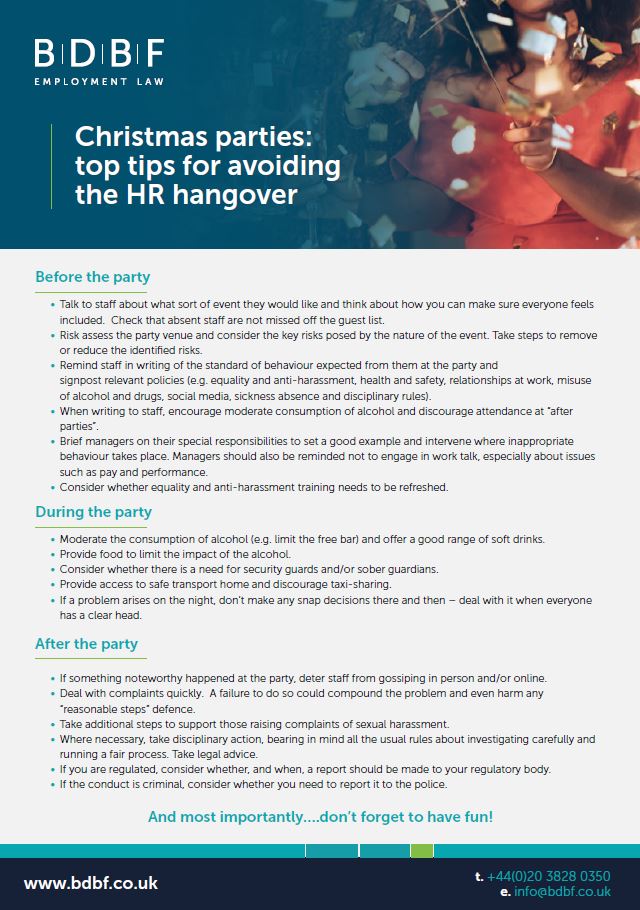
Christmas parties: Top tips for avoiding the HR hangover

[et_pb_section fb_built=”1″ _builder_version=”3.0.100″ background_image=”http://davidk423.sg-host.com/wp-content/uploads/2017/09/bdbf_final-stages-1-4-1.jpg” custom_padding=”|||” global_module=”2165″ saved_tabs=”all” global_colors_info=”{}”][et_pb_row _builder_version=”4.16″ min_height=”66.4px” custom_padding=”50px||||false|false” global_colors_info=”{}”][et_pb_column type=”4_4″ _builder_version=”4.16″ custom_padding=”|||” global_colors_info=”{}” custom_padding__hover=”|||”][et_pb_text _builder_version=”4.16″ _dynamic_attributes=”content” text_font=”|700|||||||” text_font_size=”27px” background_layout=”dark” custom_margin=”0px|||” custom_padding=”0px|||” global_colors_info=”{}”]@ET-DC@eyJkeW5hbWljIjp0cnVlLCJjb250ZW50IjoicG9zdF90aXRsZSIsInNldHRpbmdzIjp7ImJlZm9yZSI6IiIsImFmdGVyIjoiIn19@[/et_pb_text][et_pb_text _builder_version=”4.16″ _dynamic_attributes=”content” _module_preset=”default” text_text_color=”#FFFFFF” global_colors_info=”{}”]@ET-DC@eyJkeW5hbWljIjp0cnVlLCJjb250ZW50IjoicG9zdF9kYXRlIiwic2V0dGluZ3MiOnsiYmVmb3JlIjoiIiwiYWZ0ZXIiOiIiLCJkYXRlX2Zvcm1hdCI6ImRlZmF1bHQiLCJjdXN0b21fZGF0ZV9mb3JtYXQiOiIifX0=@[/et_pb_text][/et_pb_column][/et_pb_row][/et_pb_section][et_pb_section fb_built=”1″ admin_label=”section” _builder_version=”4.16″ global_colors_info=”{}”][et_pb_row column_structure=”1_2,1_2″ admin_label=”row” _builder_version=”4.16″ background_size=”initial” background_position=”top_left” background_repeat=”repeat” global_colors_info=”{}”][et_pb_column type=”1_2″ _builder_version=”4.16″ custom_padding=”|||” global_colors_info=”{}” custom_padding__hover=”|||”][et_pb_text _builder_version=”4.19.1″ text_orientation=”justified” use_border_color=”off” global_colors_info=”{}”]

The Christmas countdown has begun! As we all get ready to celebrate the party season, ho-ho-how can you ensure your end-of-year celebration is remembered for all the right reasons?

Check out our top tips for avoiding the HR hangover here.

[/et_pb_text][/et_pb_column][et_pb_column type=”1_2″ _builder_version=”4.16″ custom_padding=”|||” global_colors_info=”{}” custom_padding__hover=”|||”][et_pb_image src=”http://davidk423.sg-host.com/wp-content/uploads/2022/11/Christmas-parties-top-tips-for-avoiding-the-HR-hangover_1.jpg” title_text=”Christmas-parties-top-tips-for-avoiding-the-HR-hangover_1″ _builder_version=”4.19.1″ _module_preset=”default” hover_enabled=”0″ global_colors_info=”{}” url=”http://davidk423.sg-host.com/wp-content/uploads/2022/11/Christmas-parties-top-tips-for-avoiding-the-HR-hangover_1.pdf” sticky_enabled=”0″][/et_pb_image][/et_pb_column][/et_pb_row][/et_pb_section][et_pb_section fb_built=”1″ _builder_version=”4.16″ global_colors_info=”{}”][et_pb_row _builder_version=”4.16″ global_colors_info=”{}”][et_pb_column type=”4_4″ _builder_version=”4.16″ global_colors_info=”{}”][/et_pb_column][/et_pb_row][/et_pb_section]


Spotlight: Gareth Brahams

[et_pb_section fb_built=”1″ _builder_version=”3.0.100″ background_image=”http://davidk423.sg-host.com/wp-content/uploads/2017/09/bdbf_final-stages-1-4-1.jpg” custom_padding=”|||” global_module=”2165″ saved_tabs=”all” global_colors_info=”{}”][et_pb_row _builder_version=”4.16″ min_height=”66.4px” custom_padding=”50px||||false|false” global_colors_info=”{}”][et_pb_column type=”4_4″ _builder_version=”4.16″ custom_padding=”|||” global_colors_info=”{}” custom_padding__hover=”|||”][et_pb_text _builder_version=”4.16″ _dynamic_attributes=”content” text_font=”|700|||||||” text_font_size=”27px” background_layout=”dark” custom_margin=”0px|||” custom_padding=”0px|||” global_colors_info=”{}”]@ET-DC@eyJkeW5hbWljIjp0cnVlLCJjb250ZW50IjoicG9zdF90aXRsZSIsInNldHRpbmdzIjp7ImJlZm9yZSI6IiIsImFmdGVyIjoiIn19@[/et_pb_text][et_pb_text _builder_version=”4.16″ _dynamic_attributes=”content” _module_preset=”default” text_text_color=”#FFFFFF” global_colors_info=”{}”]@ET-DC@eyJkeW5hbWljIjp0cnVlLCJjb250ZW50IjoicG9zdF9kYXRlIiwic2V0dGluZ3MiOnsiYmVmb3JlIjoiIiwiYWZ0ZXIiOiIiLCJkYXRlX2Zvcm1hdCI6ImRlZmF1bHQiLCJjdXN0b21fZGF0ZV9mb3JtYXQiOiIifX0=@[/et_pb_text][/et_pb_column][/et_pb_row][/et_pb_section][et_pb_section fb_built=”1″ admin_label=”section” _builder_version=”4.16″ global_colors_info=”{}”][et_pb_row column_structure=”3_5,2_5″ admin_label=”row” _builder_version=”4.16″ background_size=”initial” background_position=”top_left” background_repeat=”repeat” global_colors_info=”{}”][et_pb_column type=”3_5″ _builder_version=”4.16″ custom_padding=”|||” global_colors_info=”{}” custom_padding__hover=”|||”][et_pb_text _builder_version=”4.19.1″ text_orientation=”justified” hover_enabled=”0″ use_border_color=”off” global_colors_info=”{}” sticky_enabled=”0″]

To end BDBF’s “10 in Ten” we spoke to Managing Partner, Gareth Brahams, to discuss his journey over the past 10 years and hear his thoughts on this momentous milestone.

What are the biggest challenges you have faced as managing partner, and how did you overcome them?

We had a couple of our partners decide to leave the law and that left a hole for us which we needed to fill by lateral recruitment, but I used a trusted recruitment consultant and, frankly, it gave us something to do during the early days of the pandemic when the tribunals were not operating and nearly everything ground to a halt.

What do the next 10 years hold for BDBF?

That is a good question. We are going to remain focused on helping people who get into high value/high stakes disputes with their employers or the firms they work at get through the most challenging work issues they face in their lives. We will also continue to help employers who are on the reverse side of that. We have always been willing to push the boundaries of the law and what people ordinarily think of as employment law to get clients the right results and that can take us in all sorts of interesting directions but the joy of it is, we don’t know what they are until the case comes in. 

If you could sum up the past 10 years in three words, what would they be?

Exhilarating, Educational, Enjoyable.

[/et_pb_text][/et_pb_column][et_pb_column type=”2_5″ _builder_version=”4.16″ custom_padding=”|||” global_colors_info=”{}” custom_padding__hover=”|||”][et_pb_image src=”http://davidk423.sg-host.com/wp-content/uploads/2022/11/Post-5-revisedBW-AlternativeDesign.jpg” title_text=”Post 5 revised(BW)-AlternativeDesign” _builder_version=”4.19.1″ _module_preset=”default” hover_enabled=”0″ global_colors_info=”{}” sticky_enabled=”0″][/et_pb_image][/et_pb_column][/et_pb_row][/et_pb_section][et_pb_section fb_built=”1″ _builder_version=”4.16″ global_colors_info=”{}”][et_pb_row _builder_version=”4.16″ global_colors_info=”{}”][et_pb_column type=”4_4″ _builder_version=”4.16″ global_colors_info=”{}”][/et_pb_column][/et_pb_row][/et_pb_section]


Pregnant employees and those returning from family leave to receive special protection in redundancy situations

[et_pb_section fb_built=”1″ _builder_version=”3.0.100″ background_image=”http://davidk423.sg-host.com/wp-content/uploads/2017/09/bdbf_final-stages-1-4-1.jpg” custom_padding=”|||” global_module=”2165″ saved_tabs=”all” global_colors_info=”{}”][et_pb_row _builder_version=”4.16″ min_height=”66.4px” custom_padding=”50px||||false|false” global_colors_info=”{}”][et_pb_column type=”4_4″ _builder_version=”4.16″ custom_padding=”|||” global_colors_info=”{}” custom_padding__hover=”|||”][et_pb_text _builder_version=”4.16″ _dynamic_attributes=”content” text_font=”|700|||||||” text_font_size=”27px” background_layout=”dark” custom_margin=”0px|||” custom_padding=”0px|||” global_colors_info=”{}”]@ET-DC@eyJkeW5hbWljIjp0cnVlLCJjb250ZW50IjoicG9zdF90aXRsZSIsInNldHRpbmdzIjp7ImJlZm9yZSI6IiIsImFmdGVyIjoiIn19@[/et_pb_text][et_pb_text _builder_version=”4.16″ _dynamic_attributes=”content” _module_preset=”default” text_text_color=”#FFFFFF” global_colors_info=”{}”]@ET-DC@eyJkeW5hbWljIjp0cnVlLCJjb250ZW50IjoicG9zdF9kYXRlIiwic2V0dGluZ3MiOnsiYmVmb3JlIjoiIiwiYWZ0ZXIiOiIiLCJkYXRlX2Zvcm1hdCI6ImRlZmF1bHQiLCJjdXN0b21fZGF0ZV9mb3JtYXQiOiIifX0=@[/et_pb_text][/et_pb_column][/et_pb_row][/et_pb_section][et_pb_section fb_built=”1″ admin_label=”section” _builder_version=”4.16″ global_colors_info=”{}”][et_pb_row admin_label=”row” _builder_version=”4.16″ background_size=”initial” background_position=”top_left” background_repeat=”repeat” global_colors_info=”{}”][et_pb_column type=”4_4″ _builder_version=”4.16″ custom_padding=”|||” global_colors_info=”{}” custom_padding__hover=”|||”][et_pb_text _builder_version=”4.19.1″ text_orientation=”justified” use_border_color=”off” global_colors_info=”{}”]

The Government has backed a Private Members’ Bill which plans to expand special protection in redundancy situations to pregnant employees and those returning from maternity, adoption and shared parental leave. 

What is the background to these proposals?

Currently, employees absent on either maternity, adoption or shared parental leave are afforded special protection in redundancy situations.  The law provides that before making a woman who is on maternity leave (or an employee on adoption or shared parental leave) redundant, an employer must offer the employee a suitable alternative vacancy, where one is available.  In other words, the employee moves to the front of the queue for such roles, ahead of other colleagues.  If an employer fails to comply with its obligations in this respect, the employee may be able to bring an automatic unfair dismissal claim.

In 2019, the Government consulted on extending this protection to pregnant employees and those who had recently returned to work following a period of maternity, adoption or shared parental leave.  The Queen’s Speech delivered at the end of 2019 outlined plans for a new Employment Bill which would introduce these new rights.

Perhaps unsurprisingly, the Employment Bill fell off the Government’s agenda as a result of the pandemic.   However, in 2021, the Government published its response to the Women and Equalities Committee’s report on the gendered economic impact of Covid-19, stating that it remained committed to bringing forward the Employment Bill and, specifically, that it would extend redundancy protection as planned.

However, the Employment Bill did not materialise.  Three years and two Prime Ministers later, the proposals are back in the spotlight again.  This time, by way of a Private Members’ Bill – the Protection from Redundancy (Pregnancy and Family Leave) Bill – sponsored by the Labour MP, Dan Jarvis.  The Government is backing the new Bill, meaning it has a good chance of getting onto the statute books even though it is a Private Members’ Bill.

What changes would the Bill make to redundancy law?

The Bill itself does not make any changes to redundancy law.  Instead, it would amend the Employment Rights Act 1996 to allow regulations to be made which would expand the protection to cover both pregnant employees and those who have recently returned to work after a period of either maternity, adoption or shared parental leave.

The intention is that a woman would acquire protection from the point at which she notified her employer that she was pregnant.  Typically, a woman will notify her employer of her pregnancy after she has had her three-month scan (although this may be done earlier, for example, if the woman has suffered a history of pregnancy loss or the pregnancy is otherwise regarded as high risk).  Therefore, in most cases, this would translate to protection during pregnancy lasting around six months, at which point the maternity leave period would commence.

The intention is that the protection would also apply for six months after the return to work.  For example, a woman who notified her employer of her pregnancy at the three-month stage and then took 12 months’ maternity leave would be protected for a total period of 24 months (i.e. six months’ protection during pregnancy, 12 months’ protection during maternity leave and six months’ protection upon the return to work).  At present, such a woman would be protected for the 12-month maternity leave period only.

The precise scope and mechanics of these new protections will be set out in the regulations themselves.

What will the changes mean for employers?

With the Government’s support, the Bill passed its second reading in the House of Commons on 21 October 2022.  It will now progress to the Committee stage, which will allow detailed scrutiny of the Bill.  After that, it would move to the Report stage and third reading and then to the House of Lords to start the process all over again.  Even if the Bill passes, the new protections will not be introduced straight away.   Regulations will need to be drafted and laid before Parliament.

Therefore, there are no immediate changes for employers to make in light of the Bill.  However, it would be sensible to work on the assumption that the Bill will pass given the Government’s longstanding commitment to introduce these changes.

Assuming that the Bill passes, and regulations are introduced, employers will need to consider the following points:

  • Be mindful that the protection may apply where a woman was pregnant but suffers the loss of the child (for example a miscarriage or a still birth).
  • Update any relevant staff-facing procedures and internal guidelines on how to manage a redundancy process.
  • Train members of HR, and line managers who will have responsibility for redundancy processes, to ensure that they understand the new rules, know how to apply them and understand the consequences of non-compliance.

We will keep you updated on the progress of the Bill.

Protection from Redundancy (Pregnancy and Family Leave) Bill 2022 – 23

Brahams Dutt Badrick French LLP are a leading specialist employment law firm based at Bank in the City. If you would like to discuss any issues relating to the content of this article, please contact Amanda Steadman (AmandaSteadman@bdbf.co.uk) or your usual BDBF contact.

[/et_pb_text][/et_pb_column][/et_pb_row][/et_pb_section][et_pb_section fb_built=”1″ _builder_version=”4.16″ global_colors_info=”{}”][et_pb_row _builder_version=”4.16″ global_colors_info=”{}”][et_pb_column type=”4_4″ _builder_version=”4.16″ global_colors_info=”{}”][/et_pb_column][/et_pb_row][/et_pb_section]