Let’s Get Real About Menopause

[et_pb_section fb_built=”1″ _builder_version=”3.0.100″ background_image=”http://davidk423.sg-host.com/wp-content/uploads/2017/09/bdbf_final-stages-1-4-1.jpg” custom_padding=”|||” global_module=”2165″ saved_tabs=”all”][et_pb_row _builder_version=”4.7.4″ min_height=”66.4px” custom_padding=”50px||||false|false”][et_pb_column type=”4_4″ _builder_version=”3.25″ custom_padding=”|||” custom_padding__hover=”|||”][et_pb_text _builder_version=”4.7.4″ _dynamic_attributes=”content” text_font=”|700|||||||” text_font_size=”27px” background_layout=”dark” custom_margin=”0px|||” custom_padding=”0px|||”]@ET-DC@eyJkeW5hbWljIjp0cnVlLCJjb250ZW50IjoicG9zdF90aXRsZSIsInNldHRpbmdzIjp7ImJlZm9yZSI6IiIsImFmdGVyIjoiIn19@[/et_pb_text][et_pb_text _builder_version=”4.7.4″ _dynamic_attributes=”content” _module_preset=”default” background_layout=”dark”]@ET-DC@eyJkeW5hbWljIjp0cnVlLCJjb250ZW50IjoicG9zdF9kYXRlIiwic2V0dGluZ3MiOnsiYmVmb3JlIjoiIiwiYWZ0ZXIiOiIiLCJkYXRlX2Zvcm1hdCI6ImRlZmF1bHQiLCJjdXN0b21fZGF0ZV9mb3JtYXQiOiIifX0=@[/et_pb_text][/et_pb_column][/et_pb_row][/et_pb_section][et_pb_section fb_built=”1″ admin_label=”section” _builder_version=”3.22.3″][et_pb_row admin_label=”row” _builder_version=”4.7.4″ background_size=”initial” background_position=”top_left” background_repeat=”repeat”][et_pb_column type=”4_4″ _builder_version=”3.25″ custom_padding=”|||” custom_padding__hover=”|||”][et_pb_text _builder_version=”4.7.4″ text_orientation=”justified” hover_enabled=”0″ use_border_color=”off” sticky_enabled=”0″]

It has been some time coming but, finally, the legislators seem to be taking the issue of menopause and the impact it has on some women’s professional lives seriously. 

The Women and Equalities Committee (WEC) has asked for submissions from the public to help them understand the extent of discrimination faced by menopausal workers and how Government policy and workplace practices can better support those experiencing menopause.

Research conducted in 2019 by the Chartered Institute of Personnel and Development (CIPD) laid bare the difficulties faced by menopausal women (usually aged between 45-55, although menopause can occur earlier or later) at work.  The report highlighted that of those who experienced menopausal symptoms at work:

  • Nearly two-thirds (65%) said they had trouble concentrating.
  • More than half (58%) said they experienced more stress.
  • More than half (52%) said they struggled to be patient with clients and colleagues.
  • Only a quarter (25%) felt able to explain their symptoms and the reason for them to their manager.This was due to privacy concerns (45%), embarrassment (34%), and unsupportive management (32%).

This year, the CIPD, in partnership with Bupa, issued guidance for line managers on menopause at work.  This contained a startling statistic – almost a million women have left the workforce due to menopause-related symptoms.  Few would deny that this exit of talent is damaging to not only the women concerned, but the economy as a whole.

Children, elderly parents, and menopause – a difficult combination

Research shows that the more highly educated a woman is, the later she is likely to have children.  In London, for example, the rate of women giving birth for the first time over the age of 40 now outstrips those becoming mothers in their teenage years.  However, having children between the ages of 35 and 45 means that many women in professional sectors such as finance, engineering, law, and medicine hit perimenopause[1] just as their children are moving into the sometimes challenging teenage years and their ageing parents require more care.  Unfortunately, to date, little research has been done on the impact of this ‘triple whammy’ on women’s careers.

New research on menopause and workers in the financial services sector

A study examining the effects of perimenopause and menopause on women’s economic participation in the financial services sector is being conducted by Standard Chartered Bank and Financial Services Skills Commission.   The research is being carried out by the Fawcett Society, the UK’s leading charity campaigning for gender equality and women’s rights.  The study aims to explore how perimenopause and menopause impacts women working in the financial sector and their ability to progress into senior roles, especially given that the opportunity to advance into those senior roles usually presents itself between the ages of 45-55 years.

The findings from the research will be published in Autumn 2021.

Supporting working women through the menopause transition

A 2016 paper[2] made the following recommendations to improve workplace conditions for peri- and postmenopausal workers:

  • Raise awareness amongst the workforce
  • Encourage disclosure of symptoms
  • Temperature control
  • Stress reduction
  • Flexible work arrangements
  • Access to water and toilets

These are relatively simple changes that employers can make to support women managing symptoms such as hot flashes, exhaustion, heavy periods, anxiety, depression, and difficulty concentrating.

The argument for making menopause a protected characteristic under the Equality Act 2010

One solution for safeguarding women dealing with perimenopause and menopause symptoms is to make menopause a protected characteristic under the Equality Act 2010.  Currently, women bringing a claim for menopause-related discrimination must do so under one of the existing protected characteristics, typically sex, age, or disability.  This limitation has resulted in Employment Tribunal decisions being mixed.  Furthermore, lumping a natural condition that 50 per cent of the population experience underage, sex, or disability reinforces stereotypes of the older woman being less competent and able.  Making menopause a protected characteristic in its own right moves the term away from illness, disability, ageing, and ‘female problems’, none of which have anything to do with the natural hormone shift that brings on menopause.

Caroline Nokes MP, Chair of the WEC inquiry has said she is open minded about recommending that equality laws be changed to protect menopausal women if evidence received during the inquiry supports such a proposal.

Final words

There are significant gaps in our knowledge of how menopause affects working women and the inquiries and study mentioned above will help address this issue.  In turn, Government policies can be adjusted to fit the reality of the modern workplace.  Menopause at work needs to become a mainstream issue for employers to ensure organisations can retain the experience and talent provided by those aged over 40.

If you would like to discuss how the menopause is affecting you at work, or how your organisation can support staff though the menopause, please contact Amanda Steadman (amandasteadman@bdbf.co.uk) or your usual BDBF contact.

[1] The transition period before menopause which can result in significant menopausal symptoms.  Perimenopause can last a few months to a few years (sometimes up to a decade) before menopause officially occurs.

[2] GRIFFITHS. A., CEAUSU, I., DEPYPERE, H., LAMBRINOUDAKI. I., MUECK, A. PEREZ-LOPEZ, F.R., VAN DER SCHOUW, Y.T., SENTURK, L.M., SIMONCINI, T., STEVENSON, J.C., STUTE, P. and REES, M. (2016) EMAS recommendations for conditions in the workplace for menopausal women, Maturitas, Vol. 85, pp.79-81, ISSN 1873-411

[/et_pb_text][/et_pb_column][/et_pb_row][/et_pb_section][et_pb_section fb_built=”1″ _builder_version=”3.26.6″][et_pb_row _builder_version=”3.26.6″][et_pb_column type=”4_4″ _builder_version=”3.26.6″][/et_pb_column][/et_pb_row][/et_pb_section]

Claire Dawson speaks to Anita Rani on BBC Woman’s Hour

[et_pb_section fb_built=”1″ _builder_version=”3.0.100″ background_image=”http://davidk423.sg-host.com/wp-content/uploads/2017/09/bdbf_final-stages-1-4-1.jpg” custom_padding=”|||” global_module=”2165″ saved_tabs=”all”][et_pb_row _builder_version=”4.7.4″ min_height=”66.4px” custom_padding=”50px||||false|false”][et_pb_column type=”4_4″ _builder_version=”3.25″ custom_padding=”|||” custom_padding__hover=”|||”][et_pb_text _builder_version=”4.7.4″ _dynamic_attributes=”content” text_font=”|700|||||||” text_font_size=”27px” background_layout=”dark” custom_margin=”0px|||” custom_padding=”0px|||”]@ET-DC@eyJkeW5hbWljIjp0cnVlLCJjb250ZW50IjoicG9zdF90aXRsZSIsInNldHRpbmdzIjp7ImJlZm9yZSI6IiIsImFmdGVyIjoiIn19@[/et_pb_text][et_pb_text _builder_version=”4.7.4″ _dynamic_attributes=”content” _module_preset=”default” background_layout=”dark”]@ET-DC@eyJkeW5hbWljIjp0cnVlLCJjb250ZW50IjoicG9zdF9kYXRlIiwic2V0dGluZ3MiOnsiYmVmb3JlIjoiIiwiYWZ0ZXIiOiIiLCJkYXRlX2Zvcm1hdCI6ImRlZmF1bHQiLCJjdXN0b21fZGF0ZV9mb3JtYXQiOiIifX0=@[/et_pb_text][/et_pb_column][/et_pb_row][/et_pb_section][et_pb_section fb_built=”1″ admin_label=”section” _builder_version=”3.22.3″][et_pb_row column_structure=”1_2,1_2″ admin_label=”row” _builder_version=”3.25″ background_size=”initial” background_position=”top_left” background_repeat=”repeat”][et_pb_column type=”1_2″ _builder_version=”3.25″ custom_padding=”|||” custom_padding__hover=”|||”][et_pb_text _builder_version=”4.7.4″ text_orientation=”justified” use_border_color=”off”]

Claire Dawson, Employment Lawyer and Partner at BDBF spoke to Anita Rani on BBC Womans Hour about pregnancy discrimination and maternity rights in light of Dr Katie Lidster’s case.

Clcik here to listen: https://bbc.in/3xIcobK


[/et_pb_text][/et_pb_column][et_pb_column type=”1_2″ _builder_version=”3.25″ custom_padding=”|||” custom_padding__hover=”|||”][et_pb_image src=”http://davidk423.sg-host.com/wp-content/uploads/2021/08/Claire-Dawson-Blog.jpg” title_text=”Claire-Dawson-Blog” _builder_version=”4.7.4″ _module_preset=”default” hover_enabled=”0″ sticky_enabled=”0″][/et_pb_image][/et_pb_column][/et_pb_row][/et_pb_section][et_pb_section fb_built=”1″ _builder_version=”3.26.6″][et_pb_row _builder_version=”3.26.6″][et_pb_column type=”4_4″ _builder_version=”3.26.6″][/et_pb_column][/et_pb_row][/et_pb_section]


Feel pushed to go back to the office? Emily Plosker is quoted on this topic by Financial News

[et_pb_section fb_built=”1″ _builder_version=”3.0.100″ background_image=”http://davidk423.sg-host.com/wp-content/uploads/2017/09/bdbf_final-stages-1-4-1.jpg” custom_padding=”|||” global_module=”2165″ saved_tabs=”all”][et_pb_row _builder_version=”4.7.4″ min_height=”66.4px” custom_padding=”50px||||false|false”][et_pb_column type=”4_4″ _builder_version=”3.25″ custom_padding=”|||” custom_padding__hover=”|||”][et_pb_text _builder_version=”4.7.4″ _dynamic_attributes=”content” text_font=”|700|||||||” text_font_size=”27px” background_layout=”dark” custom_margin=”0px|||” custom_padding=”0px|||”]@ET-DC@eyJkeW5hbWljIjp0cnVlLCJjb250ZW50IjoicG9zdF90aXRsZSIsInNldHRpbmdzIjp7ImJlZm9yZSI6IiIsImFmdGVyIjoiIn19@[/et_pb_text][et_pb_text _builder_version=”4.7.4″ _dynamic_attributes=”content” _module_preset=”default” background_layout=”dark”]@ET-DC@eyJkeW5hbWljIjp0cnVlLCJjb250ZW50IjoicG9zdF9kYXRlIiwic2V0dGluZ3MiOnsiYmVmb3JlIjoiIiwiYWZ0ZXIiOiIiLCJkYXRlX2Zvcm1hdCI6ImRlZmF1bHQiLCJjdXN0b21fZGF0ZV9mb3JtYXQiOiIifX0=@[/et_pb_text][/et_pb_column][/et_pb_row][/et_pb_section][et_pb_section fb_built=”1″ admin_label=”section” _builder_version=”3.22.3″][et_pb_row column_structure=”3_5,2_5″ admin_label=”row” _builder_version=”3.25″ background_size=”initial” background_position=”top_left” background_repeat=”repeat”][et_pb_column type=”3_5″ _builder_version=”3.25″ custom_padding=”|||” custom_padding__hover=”|||”][et_pb_text _builder_version=”4.7.4″ text_orientation=”justified” hover_enabled=”0″ use_border_color=”off” sticky_enabled=”0″]

Feel pushed to go back to the office? How will a daily commute impact on the job being done, professional and business development? What should employees be asking their employers as the much anticipated return to the office approaches?

Emily Plosker, BDBF Senior Associate, was recently quoted on this topic by Financial News. What are your views?

Read the full article here: https://www.fnlondon.com

#covid #returntotheoffice #21June #ukemplaw


[/et_pb_text][/et_pb_column][et_pb_column type=”2_5″ _builder_version=”3.25″ custom_padding=”|||” custom_padding__hover=”|||”][et_pb_image src=”http://davidk423.sg-host.com/wp-content/uploads/2021/06/blurred-people-commuting-tube.jpg” title_text=”blurred-people-commuting-tube” _builder_version=”4.7.4″ _module_preset=”default”][/et_pb_image][/et_pb_column][/et_pb_row][/et_pb_section][et_pb_section fb_built=”1″ _builder_version=”3.26.6″][et_pb_row _builder_version=”3.26.6″][et_pb_column type=”4_4″ _builder_version=”3.26.6″][/et_pb_column][/et_pb_row][/et_pb_section]


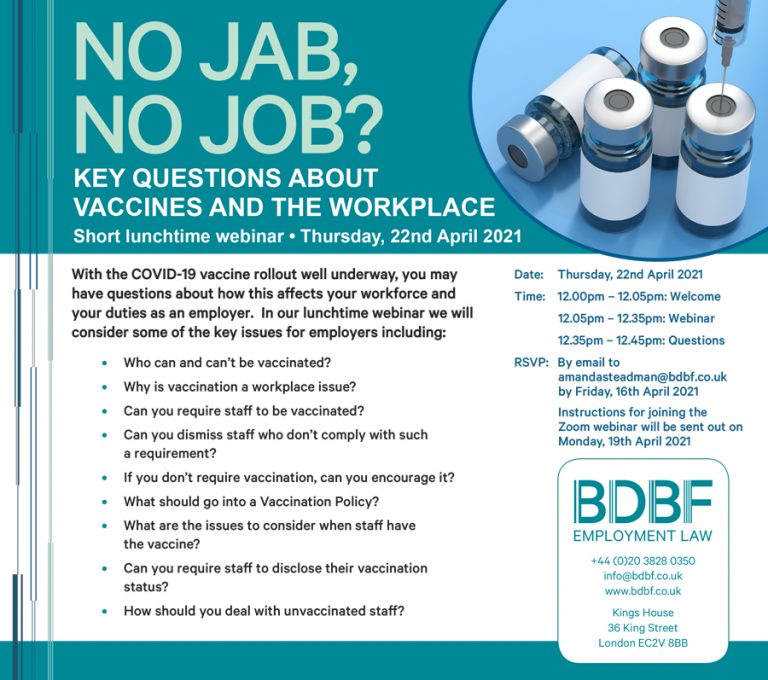
Webinar: No jab, no job? Key questions about vaccines and the workplace

[et_pb_section fb_built=”1″ _builder_version=”3.0.100″ background_image=”http://davidk423.sg-host.com/wp-content/uploads/2017/09/bdbf_final-stages-1-4-1.jpg” custom_padding=”|||” global_module=”2165″ saved_tabs=”all”][et_pb_row _builder_version=”3.25″ custom_padding=”|||”][et_pb_column type=”4_4″ _builder_version=”3.25″ custom_padding=”|||” custom_padding__hover=”|||”][et_pb_text _builder_version=”3.27.4″ background_layout=”dark” custom_margin=”0px|||” custom_padding=”0px|||”]

Employment Law News


[/et_pb_text][/et_pb_column][/et_pb_row][/et_pb_section][et_pb_section fb_built=”1″ admin_label=”section” _builder_version=”3.22.3″][et_pb_row admin_label=”row” _builder_version=”3.25″ background_size=”initial” background_position=”top_left” background_repeat=”repeat”][et_pb_column type=”4_4″ _builder_version=”3.25″ custom_padding=”|||” custom_padding__hover=”|||”][et_pb_text _builder_version=”4.7.4″ text_orientation=”justified” use_border_color=”off”]

Webinar: No jab, no job? Key questions about vaccines and the workplace

In this 45 minute webinar, BDBF’s Knowledge Lawyer Amanda Steadman and Managing Associate Tom McLaughlin consider key questions about vaccines and the workplace.  This webinar was originally delivered on 22 April 2021 and reflects our understanding as at that date.  Do get in contact with either of the speakers if you would like to discuss any of the issues raised. 

To view the PDF webinar slides please click on the image below, or view the recording of the webinar:

[/et_pb_text][/et_pb_column][/et_pb_row][et_pb_row column_structure=”1_2,1_2″ admin_label=”row” _builder_version=”3.25″ background_size=”initial” background_position=”top_left” background_repeat=”repeat”][et_pb_column type=”1_2″ _builder_version=”3.25″ custom_padding=”|||” custom_padding__hover=”|||”][et_pb_image src=”http://davidk423.sg-host.com/wp-content/uploads/2021/04/BDBF-vaccine-webinar-22-April-2021.jpg” title_text=”BDBF-vaccine-webinar-22-April-2021″ url=”http://davidk423.sg-host.com/wp-content/uploads/2021/04/BDBF-vaccine-webinar-22-April-2021.pdf” url_new_window=”on” align=”center” _builder_version=”4.7.4″ _module_preset=”default” border_width_all=”2px” border_color_all=”#008395″][/et_pb_image][/et_pb_column][et_pb_column type=”1_2″ _builder_version=”3.25″ custom_padding=”|||” custom_padding__hover=”|||”][et_pb_video src=”https://youtu.be/vj_6LfTRsDE” _builder_version=”4.7.4″ _module_preset=”default”][/et_pb_video][/et_pb_column][/et_pb_row][et_pb_row admin_label=”row” _builder_version=”3.25″ background_size=”initial” background_position=”top_left” background_repeat=”repeat”][et_pb_column type=”4_4″ _builder_version=”3.25″ custom_padding=”|||” custom_padding__hover=”|||”][et_pb_text _builder_version=”4.7.4″ text_orientation=”justified” use_border_color=”off”]

Please contact Amanda Steadman (amandasteadman@bdbf.co.uk), Tom McLaughlin (tommclaughlin@bdbf.co.uk), or your usual BDBF contact, for further advice.

[/et_pb_text][/et_pb_column][/et_pb_row][/et_pb_section][et_pb_section fb_built=”1″ _builder_version=”3.26.6″][et_pb_row _builder_version=”3.26.6″][et_pb_column type=”4_4″ _builder_version=”3.26.6″][/et_pb_column][/et_pb_row][/et_pb_section]


https://www.youtube.com/watch?v=vj_6LfTRsDE


Do NDAs stop finance employees from flagging workplace discrimination

[et_pb_section fb_built=”1″ _builder_version=”3.0.100″ background_image=”http://davidk423.sg-host.com/wp-content/uploads/2017/09/bdbf_final-stages-1-4-1.jpg” custom_padding=”|||” global_module=”2165″ saved_tabs=”all”][et_pb_row _builder_version=”3.25″ custom_padding=”|||”][et_pb_column type=”4_4″ _builder_version=”3.25″ custom_padding=”|||” custom_padding__hover=”|||”][et_pb_text _builder_version=”3.27.4″ background_layout=”dark” custom_margin=”0px|||” custom_padding=”0px|||”]

Employment Law News


[/et_pb_text][/et_pb_column][/et_pb_row][/et_pb_section][et_pb_section fb_built=”1″ admin_label=”section” _builder_version=”3.22.3″][et_pb_row admin_label=”row” _builder_version=”3.25″ background_size=”initial” background_position=”top_left” background_repeat=”repeat” column_structure=”1_2,1_2″][et_pb_column type=”1_2″ _builder_version=”3.25″ custom_padding=”|||” custom_padding__hover=”|||”][et_pb_text _builder_version=”4.7.4″ text_orientation=”justified” hover_enabled=”0″ use_border_color=”off” sticky_enabled=”0″]

Do NDAs stop finance employees from flagging workplace discrimination

Ever since the Weinstein scandal broke in 2017, there has been concern about the use of non-disclosure agreements – known as NDAs – to silence victims of sexual harassment and assault. Legislators in the US continue to tackle the improper use of NDAs. So what’s the position here in the UK? In this article for the Financial Reporter, BDBF Partner, Claire Dawson, looks at the protection individuals have if they speak up about discrimination and harassment after signing an NDA.

View the article here: https://www.financialreporter.co.uk/features/do-ndas-stop-finance-employees-from-flagging-workplace-discrimination.html


[/et_pb_text][/et_pb_column][et_pb_column type=”1_2″ _builder_version=”3.25″ custom_padding=”|||” custom_padding__hover=”|||”][et_pb_image _builder_version=”4.7.4″ _module_preset=”default” title_text=”Claire-Dawson” src=”http://davidk423.sg-host.com/wp-content/uploads/2021/03/Claire-Dawson.jpg” hover_enabled=”0″ sticky_enabled=”0″][/et_pb_image][/et_pb_column][/et_pb_row][/et_pb_section][et_pb_section fb_built=”1″ _builder_version=”3.26.6″][et_pb_row _builder_version=”3.26.6″][et_pb_column type=”4_4″ _builder_version=”3.26.6″][/et_pb_column][/et_pb_row][/et_pb_section]


Just Blue Monday, or something more?

[et_pb_section fb_built=”1″ _builder_version=”3.0.100″ background_image=”http://davidk423.sg-host.com/wp-content/uploads/2017/09/bdbf_final-stages-1-4-1.jpg” custom_padding=”|||” global_module=”2165″ saved_tabs=”all”][et_pb_row _builder_version=”3.25″ custom_padding=”|||”][et_pb_column type=”4_4″ _builder_version=”3.25″ custom_padding=”|||” custom_padding__hover=”|||”][et_pb_text _builder_version=”3.27.4″ background_layout=”dark” custom_margin=”0px|||” custom_padding=”0px|||”]

Employment Law News


[/et_pb_text][/et_pb_column][/et_pb_row][/et_pb_section][et_pb_section fb_built=”1″ admin_label=”section” _builder_version=”3.22.3″][et_pb_row admin_label=”row” _builder_version=”3.25″ background_size=”initial” background_position=”top_left” background_repeat=”repeat”][et_pb_column type=”4_4″ _builder_version=”3.25″ custom_padding=”|||” custom_padding__hover=”|||”][et_pb_text _builder_version=”4.7.4″ text_orientation=”justified” hover_enabled=”0″ use_border_color=”off” sticky_enabled=”0″]

Just Blue Monday, or something more? 

The third Monday in January is typically labelled “Blue Monday” and is said to be the most depressing day of the year. Christmas festivities are over, the weather remains is cold and dark, New Year’s resolutions have fallen by the wayside and Christmas credit card bills are in but people have not yet been paid.

In 2021, people are likely to feel the effects of Blue Monday more acutely due to the third lockdown imposed by the government in response to the Covid-19 pandemic. It is therefore more important than ever for people to ask themselves whether any “blue” feelings are a temporary symptom of the season or a sign that they could be suffering from a more serious condition.

This article considers this question in the context of the workplace, although of course this issue is relevant to all aspects of life.

What if you’re just “feeling blue”?

Short periods of “feeling blue” are completely normal and for the most part do not interfere with doing your job. You might find that making use of informal support networks, such as attending (virtual) coffees with colleagues can be all that it takes to lift your spirits. Some employers have mental health first aiders and/or support helplines that can provide valuable advice for those needing more support. 

Whatever the case, you should keep your moods under review by keeping a record of how you feel from week to week. This does not need to be formal, but it can help you spot signs of a more serious or prolonged condition and will enable you to take appropriate measures to prevent it.  

What if it is something more serious?  

If you consider that you are already suffering from a more serious condition, it is important to seek support from a medical professional, like your GP.

Employers have a duty to provide their employees with a reasonably safe system and place of work, exercise reasonable care for their safety and health and take all necessary steps to protect employees from risks that are reasonably foreseeable, including risks of psychiatric injury or damage.

If you believe your working conditions are affecting your health, start a conversation with your employer. It is important to discuss this with your line manager, HR, or someone else in the management chain that you feel comfortable approaching.

Let them know how you are feeling and what is causing you to feel unwell. Talk through the support you need to alleviate your condition. In some cases, it may be beneficial to attend an appointment with Occupational Health, so that a more formal support program can be put in place.

Depending on the nature and extent of your condition, you may have a “disability” under the Equality Act 2010. Your condition will amount to a disability if it is a physical or mental impairment and the impairment has a substantial and long-term adverse effect on your ability to carry out normal day-to-day activities. While there are many aspects to this definition, it is important to be aware that for a condition to be long term, so as to satisfy this part of the test, it needs to have lasted, or be expected to last, for at least 12 months. 

Importantly, employers are under a proactive duty to make reasonably adjustments for disabled employees to avoid the disadvantage caused by their disability in the workplace. For mental health issues, this duty arises irrespective of whether the impairment was caused by work or by an external factor.

The duty to make reasonable adjustments is the cornerstone of disability law. It arises only once the employer knows, or could reasonably be expected to know, of an employee’s disability. In practice, this means that you do need to communicate with your employer about your condition so that they are put on actual notice. This makes having a conversation with your employer incredibly important. For example, if you are unable to work because you are struggling with your mental health, you should consider making this clear during a return to work interview and on any sick notes provided by your GP rather than, as happens frequently, recording your absence as a cold or other such illness. As well as helping you to access immediate support, it will assist your position in any subsequent legal proceedings should the support you need be unavailable or should you be subjected to detrimental treatment.

It is unlawful for your employer to treat you unfavourably because of your disability. It is also unlawful for you to be treated unfavourably because of something arising in consequence of your disability, unless such treatment can be objectively justified. For example, some people with depression find it difficult to get up in the mornings, making them late for work. If this is an effect of your depression and you are disciplined for poor time-keeping, without account being taken of your depression, this could constitute discrimination arising from your disability, i.e. the unfavourable treatment was because of something that was not the disability itself, but caused by the disability. If you find yourself in this situation, it is important to be open with your employer about why your timekeeping suffers in the mornings and discuss whether changes can be made to your working pattern to assist you.

Conclusion

The stigma around mental health in the workplace is reducing, but there is still some way to go. If you are finding work difficult due to mental health reasons, an important first step is to have a conversation with someone within the organisation that you trust so that they can help you access the support that should be available, whether that is to alleviate the effects of Blue Monday or as part of a longer term need.  

[/et_pb_text][/et_pb_column][/et_pb_row][/et_pb_section][et_pb_section fb_built=”1″ _builder_version=”3.26.6″][et_pb_row _builder_version=”3.26.6″][et_pb_column type=”4_4″ _builder_version=”3.26.6″][/et_pb_column][/et_pb_row][/et_pb_section]


Coronavirus and the workplace – twelve key questions

[et_pb_section fb_built=”1″ _builder_version=”3.0.100″ background_image=”http://davidk423.sg-host.com/wp-content/uploads/2017/09/bdbf_final-stages-1-4-1.jpg” custom_padding=”|||” global_module=”2165″ saved_tabs=”all”][et_pb_row _builder_version=”3.25″ custom_padding=”|||”][et_pb_column type=”4_4″ _builder_version=”3.25″ custom_padding=”|||” custom_padding__hover=”|||”][et_pb_text _builder_version=”3.27.4″ background_layout=”dark” custom_margin=”0px|||” custom_padding=”0px|||”]

Employment Law News

[/et_pb_text][/et_pb_column][/et_pb_row][/et_pb_section][et_pb_section fb_built=”1″ admin_label=”section” _builder_version=”3.22.3″][et_pb_row admin_label=”row” _builder_version=”3.25″ background_size=”initial” background_position=”top_left” background_repeat=”repeat”][et_pb_column type=”4_4″ _builder_version=”3.25″ custom_padding=”|||” custom_padding__hover=”|||”][et_pb_text _builder_version=”4.2.2″ text_orientation=”justified” hover_enabled=”0″ use_border_color=”off”]

Coronavirus and the workplace – twelve key questions

The Government has declared the coronavirus to be a “serious and imminent threat to public health” and that it is highly likely that the virus will become widespread.  Indeed, it has been estimated that up to one fifth of the UK workforce may be off sick at the peak of an epidemic.  Employers need to take steps to protect their workers and be ready to deal with the disruption that the coronavirus will cause.  In this briefing, we consider twelve frequently asked questions from employers.

  1. None of our employees have the coronavirus – do we need to do anything?

Yes.  Even if there are no instances of the coronavirus in your workplace, you must still take steps to meet your legal duty to protect the health, safety and welfare of your workers.  This duty requires you not to expose people to material risks and this includes risks posed by the coronavirus.  You should assess and document risks generally for all workers and specifically for those who are vulnerable to the coronavirus (e.g. those with underlying respiratory problems, heart conditions, diabetes, cancer and older workers).  Special consideration should also be given to any specific risks to pregnant workers, those who have given birth in the last 6 months or who are breast feeding.

You will be expected to take reasonable steps to control or eliminate identified risks.  The Government’s latest guidance for employers highlights that the virus is most likely to spread by touching or standing close to an affected person and, possibly, by touching contaminated surfaces and then touching the face.  Risk control measures could include steps such as:

  • Circulating the Government’s latest guidance to staff and giving them a point of contact within the business to discuss any concerns.
  • Reminding staff about the recommended hygiene measures.
  • Discouraging physical forms of greetings such as handshakes and kisses.
  • Temporarily banning attendance at non-essential meetings, conferences and social events.
  • Cancelling any large gatherings such as internal conferences or parties.
  • Providing plenty of free tissues and additional bins.
  • Providing access to anti-bacterial handwash and hand sanitiser.
  • Providing anti-bacterial surface spray or wipes in kitchen and eating areas;
  • Engaging additional cleaning services.
  • Designating a special area for breastfeeding mothers to wash and store breast pump equipment and expressed milk.
  • Designating a special area for anyone who is displaying symptoms of coronavirus whilst at work.
  • Allowing vulnerable workers and pregnant workers to work from home.
  • Allowing other staff to work from home wherever possible.
  1. One of our employees feels unwell and thinks they might have the coronavirus – what should we do?

If the employee is at work, they should immediately be removed to an isolated area until they are able to go home.  The Government’s latest guidance is that such individuals should not go to a GP or hospital and nor should they contact NHS 111 for advice.  Currently, such individuals will not be tested for the coronavirus.  The employee will need to self-isolate for 7 or 14 days depending on their household arrangements (see 8 below).

The Government’s advice is that employers in this situation do not need to take any special measures such as sending staff home or deep cleaning the workplace.  This is because most suspected cases turn out to be negative.

  1. One of our employees has been in direct contact with someone who has a confirmed case of the coronavirus – what should we do?

The employee should be advised to call NHS 111 for advice.  They will probably be advised to self-isolate for 14 days even if they are displaying no symptoms.  If they subsequently become unwell, they should contact NHS 111 for reassessment, and they may be tested for the virus.  If the test result is negative, the employee will be advised to remain in self-isolation until 14 days has passed.  However, you won’t need to take any special measures.

  1. One of our employees has been diagnosed with the coronavirus – what should we do?

The employee will either be treated in hospital or cared for at home.  The employee should not attend work until they have fully recovered and have medical clearance to do so.  You should pay sick pay to the employee in the normal way (see 9 below).

You should notify other staff that a colleague has been diagnosed with the coronavirus, however, you should not usually need to name the individual and you should only disclose necessary information.  The Information Commissioner’s Office has published some short guidance for employers on this issue.

You will be contacted by Public Health England’s local Health Protection Team to identify those who have been in contact with the employee and discuss any special measures to be taken.  This may affect the following staff members:

  • anyone who has been in close face-to-face or touching contact;
  • anyone who has talked with, or been coughed on, for any length of time while the employee was symptomatic;
  • anyone who has cleaned up bodily fluids; and
  • close friendship or work groups.

They may advise that anyone who had contact with the affected employee should self-isolate for 14 days and be tested for the virus.   They will advise you how to undertake a deep clean of the premises and how to collect and store any rubbish produced by the affected employee.

Staff who have not had close contact with the affected employee do not need to take any precautions and can continue to work.

  1. Should we restrict or cancel overseas business travel?

Depending on the destination, yes.  Currently, the Foreign and Commonwealth Office (FCO) is advising against all travel to the Hubei province in China and the cities of Daegu, Cheongdo and Gyeongsan in South Korea (known as the “special care zones”).  All proposed travel to these destinations should be cancelled.

The FCO is also advising against all but essential travel to:

  • Italy
  • USA
  • Mainland China outside of the Hubei province.
  • South Korea outside of the special care zones.

Any proposed travel to these areas should be restricted to business-critical trips only.   In addition, the Government’s latest guidance is that everyone should now try to avoid all unnecessary travel.   If you wish to proceed with a business trip to one of these areas, be prepared for resistance from the affected employees.  In that situation you should obtain legal advice on the safest way forward.

Separately, the European Union has announced that it will suspend non-essential travel between the EU and non-European countries for 30 days from 17 March 2020.  However, this restriction does not apply to the UK.

As the situation is changing rapidly, you should track the FCO’s travel advice on a daily basis here.

  1. Can we ask employees to change or cancel their personal travel plans?

No, you cannot force an employee to change or cancel their travel plans.  The best thing you can do is keep staff updated about the Government’s latest travel advice and explain what will happen if they elect to travel to a high-risk area (i.e. self-isolation for 14 days and what that will mean for their pay – see 9 below).   In addition to avoiding high-risk areas, the Government has advised that those aged 70 or over and/or with certain underlying health conditions should avoid cruise ship travel and that everyone else should try to avoid all unnecessary travel.

  1. Do we need to take any special measures for employees returning from recent overseas trips?

Again, depending on the destination, yes.  If an employee has returned from certain areas in the last 14 days, then they must self-isolate for 14 days and call NHS 111 for advice even if they have no symptoms.  Currently, the affected areas are:

  • Italy
  • Iran
  • The Hubei province in China.
  • The special care zones in South Korea.

On top of this, if an employee has returned from certain areas in the last 14 days and has a cough, a high temperature and/or shortness of breath then the advice is the same: self-isolate for 14 days and call NHS 111 for advice.  Currently, the affected areas are anywhere else in mainland China and South Korea not listed above.  Other affected areas are: Cambodia; Hong Kong; Japan; Laos; Macau; Malaysia; Myanmar; Singapore; Taiwan; Thailand; and Vietnam.

You should consider whether you have any employees returning from these areas.  If you do, you should alert them to the Government’s advice and direct them to stay at home and call NHS 111.  If an employee turns up at work having visited one of these places in the last 14 days, you should immediately remove them to an isolated area (preferably a separate room with a separate bathroom) and tell them to call NHS 111 and follow their advice.

  1. What exactly is self-isolation and who needs to do it?

Self-isolation means staying at home, not attending work or other public areas and limiting contact with other people for a period of either 7 or 14 days.  The Government has produced guidance on self-isolation here and here.  Currently, the following people are required to self-isolate:

  • those living alone who have symptoms of the coronavirus (e.g. a continuous cough or fever) must self-isolate for 7 days from when the symptoms started;
  • all of those who live in a household with others where one person has symptoms of the coronavirus must self-isolate for 14 days from when the ill person’s symptoms started (i.e. everyone in the household must self-isolate);
  • those awaiting a coronavirus test result must self-isolate for 14 days;
  • those entering the UK from certain countries must self-isolate for 14 days; and
  • those who have been in direct contact with someone who has the coronavirus must self-isolate for 14 days.

At present, nobody outside of these groups is required to self-isolate.

  1. What should we pay to an employee who self-isolates?

The pay entitlement for employees in self-isolation will turn on their situation – we explain the entitlements for the different scenarios below.  Employers should also note that the Government has committed to helping employers with fewer than 250 employees by refunding the cost of Statutory Sick Pay (SSP) paid out as a result of the coronavirus.   The scheme will be limited to 2 weeks’ worth of SSP per employee.  At the time of writing, this scheme is not yet up and running, but further details are expected shortly.

Too unwell to work, diagnosed with the coronavirus

You should pay sick pay in the normal way, save that SSP may be payable from the first day of absence rather than the fourth.  The Government has committed to change the usual rules on entitlement to SSP for coronavirus-related absence.   At the time of writing, however, this change has not come into force.  You should also not insist upon receipt of a Fit Note (see 10 below).

Too unwell to work, not diagnosed with the coronavirus

If an employee self-isolates and is too unwell to work but has not been diagnosed with the coronavirus (either because they have not been tested or are awaiting a test result), then you should pay sick pay to them in the normal way.  Again, SSP may be payable from the first day of absence rather than the fourth day.  You should not insist upon a receipt of a Fit Note (see 10 below).

Not unwell, self-isolating because of medical advice or Government guidance

Even though the employee is not sick, they will be entitled to be paid SSP because they are following medical advice or Government guidance to self-isolate.  Again, SSP may be payable from the first day of absence rather than the fourth day.  You would probably not be obliged to pay contractual sick pay because the employee is unlikely to satisfy the terms of your policy.

However, both Acas and the CIPD recommend that employers should elect to pay contractual sick pay to an employee in this situation.  This is to ensure that the employee follows advice to self-isolate and does not attempt to return to work due to concerns about not being paid. You may wish to outline your approach in an addendum to your Sickness Absence Policy.  For example, you could say you are willing to pay contractual sick pay in this situation, save where the employee has elected to travel to a high-risk area or embark on cruise ship travel contrary to the Government’s advice.

Not unwell, self-isolating because of employer’s advice

If you have instructed an employee to self-isolate, then the employee should be paid their normal pay (not sick pay).  This is because they are complying with your instructions.

Not unwell, self-isolating out of choice

If an employee wishes to self-isolate out of fear of catching the coronavirus then you should discuss the way forward with them.  In light of the Government’s latest guidance on social distancing (see below), you should aim to agree that the employee can work from home where possible.  Where this is not possible, you could agree that the employee takes a period of paid or unpaid leave.  Ultimately, if the employee is not unwell or self-isolating, is unable to work from home and is refusing to come to work, then you could consider disciplinary action.

Not unwell and working from home

The Government’s latest guidance on social distancing is that everyone (and especially those based in London) should:

  • stop non-essential contact with others;
  • work from home where they can; and
  • stop all unnecessary travel.

This kind of social distancing is said to be very important for the over 70s, those with underlying conditions and pregnant women.   It is also expected that by the weekend of 21st – 22nd March 2020 those with the most serious health conditions should be largely shielded from all social contact for 12 weeks.

Accordingly, employers should be directing employees to work from home wherever it is possible to do so.  If the employee is working from home, you should pay them their normal pay (not sick pay).

  1. Should we insist upon a Fit Note to certify sickness absences of more than 7 days?

Medical evidence is not required for the first 7 days of sickness absence.  After 7 days, employers usually ask employees to provide a Fit Note from their GP to certify their absence.  However, the Government has advised employers to use their discretion around the need for medical evidence where an employee has been advised to self-isolate.  In other words, do not insist upon the production of a Fit Note at the moment.  The Government has also announced plans to allow a special notification via the NHS 111 helpline to be used where an employer requires evidence.

  1. Do we have to allow employees time off work if their child’s school or childcare setting has closed? Do we have to pay them?

Employees are entitled to take a reasonable amount of dependent’s leave to care for their children in emergency situations. Typically, such leave should be taken for no more than a few days.  If an employee needs a longer period of leave, they may be entitled to take parental leave (up to a maximum of 4 weeks per year per child).  Both dependent’s leave and parental leave are unpaid (unless you choose to enhance the basic right and pay for some or all such periods of leave).

Alternatively, an employee could ask to take paid annual leave or to work from home.  Whether working from home is feasible will depend on the nature of the employee’s job and the ages and/or numbers of children they will have to care for.

  1. What other preparatory steps should we be taking?

There are several helpful steps that you can take now to put your business in the best position to deal with the unfolding situation.  These include:

  • Assembling a team to be responsible for developing and operating your contingency plan.
  • Implementing an internal communications strategy.
  • Cancelling or restricting business travel to the affected areas.
  • Ensuring managers understand the approach to be followed regarding sickness absence, self-isolation and pay.
  • Ensuring staff contact numbers and emergency contact details are up to date.
  • Considering control measures such as segregation or shift working to limit the number of people in the workplace at one time.
  • Testing out homeworking arrangements and allowing staff to work from home wherever possible.

Should you require any further advice on your response to the coronavirus, please contact Amanda Steadman or your usual BDBF contact.


[/et_pb_text][/et_pb_column][/et_pb_row][/et_pb_section][et_pb_section fb_built=”1″ _builder_version=”3.26.6″][et_pb_row _builder_version=”3.26.6″][et_pb_column type=”4_4″ _builder_version=”3.26.6″][/et_pb_column][/et_pb_row][/et_pb_section]


TUPE and long-term sickness benefits

[et_pb_section fb_built=”1″ _builder_version=”3.0.100″ background_image=”http://davidk423.sg-host.com/wp-content/uploads/2017/09/bdbf_final-stages-1-4-1.jpg” custom_padding=”|||” global_module=”2165″ saved_tabs=”all”][et_pb_row _builder_version=”3.25″ custom_padding=”|||”][et_pb_column type=”4_4″ _builder_version=”3.25″ custom_padding=”|||” custom_padding__hover=”|||”][et_pb_text _builder_version=”3.27.4″ background_layout=”dark” custom_margin=”0px|||” custom_padding=”0px|||”]

Employment Law News


[/et_pb_text][/et_pb_column][/et_pb_row][/et_pb_section][et_pb_section fb_built=”1″ admin_label=”section” _builder_version=”3.22.3″][et_pb_row admin_label=”row” _builder_version=”3.25″ background_size=”initial” background_position=”top_left” background_repeat=”repeat”][et_pb_column type=”4_4″ _builder_version=”3.25″ custom_padding=”|||” custom_padding__hover=”|||”][et_pb_text _builder_version=”4.2.2″ text_orientation=”justified” hover_enabled=”0″ use_border_color=”off”]

TUPE and long-term sickness benefits: employee had contractual entitlement to receive benefits until he could return to original job

A long-term sick employee transferred under TUPE but was denied long-term sickness benefits by both the old and new employers’ PHI insurers.  After he was dismissed, he brought claims against the new employer.  The Court had to consider whether the new employer was liable to compensate the employee for the lost benefits until he was able to return to work and, if so, what that meant. 

What does the law say?

The right to benefit from an insurance scheme, such as permanent health insurance (PHI) will automatically transfer under TUPE.  What is not clear is whether the old employer’s right to be indemnified by their PHI insurer transfers to the new employer.  As a result, this is a high-risk area for the new employer.  If an employee who is receiving (or waiting to receive) PHI benefits transfers and is unable to claim under the old employer’s PHI scheme, then the new employer may be on the hook to make those payments itself. 

Further, where an employee is entitled to receive PHI benefits the courts may imply a term preventing dismissal where such dismissal would deprive them of those benefits.  If an employer dismisses in those circumstances it will be in breach of contract and may have to pay compensation equivalent to the lost PHI benefits, potentially up to the earlier of retirement or death.   

What happened in this case?

Mr Visram was employed by American Airlines as an International Security Co-ordinator at Heathrow airport. His employment contract provided for a long-term disability benefits plan.  Under the plan, he was entitled to be paid after 26 weeks’ sickness absence until the earlier of the return to work, death or retirement.  The plan was funded by a PHI policy that American Airlines held with Legal & General.  That policy provided that Mr Visram would be entitled to benefits provided that he remained employed and was too sick to perform the essential duties of the role he performed immediately before going off sick.

In October 2012, Mr Visram went off sick.  Several weeks later his employment transferred from American Airlines to ICTS (UK) Ltd (ICTS).   He remained off sick after the transfer.  When he had been off sick for 26 weeks, he expected to receive the long-term disability benefits.   However, ICTS’ own PHI insurer, Canada Life, refused to pay because Mr Visram was already on sick leave when the policy commenced.   Legal & General also refused to pay because Mr Visram was no longer employed by American Airlines.  After some discussion with ICTS, Legal & General agreed to make 18 months’ worth of payments.  At the end of that period, ICTS dismissed Mr Visram on the grounds of capability and he brought claims for unfair dismissal and disability discrimination. 

What was decided?

Mr Visram succeeded in his claims and the Employment Tribunal decided that he had a contractual entitlement to the long-term disability benefits until he was able to return to work.  This meant that ICTS had been liable to make the payments, regardless of the PHI insurers’ position. 

The question was then how long such payments should have been made for.  If return to work meant the original role, then Mr Visram should be compensated for lost benefits until the earlier of death or retirement.  If return to work meant any suitable full-time work, then, in the Tribunal’s view, compensation should be limited to 4 years’ worth of lost benefits.   The Tribunal decided that “return to work” meant returning to his original role, not an alternative role.   Therefore, ICTS had to pay compensation based upon the lost long-term disability benefits until the earlier of death or retirement.  ICTS appealed to the EAT and then the Court of Appeal.

The Court of Appeal rejected the appeal.  The Court decided that the way the contract was drafted made it clear that Mr Visram was entitled to receive the benefits until he was able to return to his previous work as an International Security Co-ordinator, not just any work.  If the intention had been to provide benefits until the point that the employee could return to any work, then this should have been made clear. 

What are the learning points?

This decision highlights two key points for employers:

  • Very careful drafting around the entitlement to long-term disability/PHI benefits is needed. Here, the drafting ultimately obliged the employer to pay these benefits to a qualifying employee.  Although the benefit was funded by insurance, the contract did not stipulate that the employee’s entitlement was contingent upon the insurer accepting the claim and making the payment to the employer.  Further, the employer’s hands were tied by the requirement to pay the benefits until the employee returned to their original role.  Had the wording been extended to cover return to an alternative role, the employer may have avoided liability.

  • Incoming employers in TUPE transfers must conduct careful due diligence on the precise nature of such entitlements. In this case, both the old and new insurers refused to fund the claim, meaning the new employer was on the hook for the payments.   Incoming employers in this situation should seek to agree an adjustment to the sale price and/or seek an indemnity from the seller to cover the risk.

ICTS (UK) Ltd v Visram

If you would like to discuss any of the issues raised in this article, please contact Amanda Steadman (amandasteadman@bdbf.co.uk) or your usual BDBF contact.


[/et_pb_text][/et_pb_column][/et_pb_row][/et_pb_section][et_pb_section fb_built=”1″ _builder_version=”3.26.6″][et_pb_row _builder_version=”3.26.6″][et_pb_column type=”4_4″ _builder_version=”3.26.6″][/et_pb_column][/et_pb_row][/et_pb_section]


The government needs to get strict on gender pay reporting

[et_pb_section fb_built=”1″ _builder_version=”3.0.100″ background_image=”http://davidk423.sg-host.com/wp-content/uploads/2017/09/bdbf_final-stages-1-4-1.jpg” custom_padding=”|||” global_module=”2165″ saved_tabs=”all”][et_pb_row _builder_version=”3.25″ custom_padding=”|||”][et_pb_column type=”4_4″ _builder_version=”3.25″ custom_padding=”|||” custom_padding__hover=”|||”][et_pb_text _builder_version=”3.27.4″ background_layout=”dark” custom_margin=”0px|||” custom_padding=”0px|||”]

Employment Law News


[/et_pb_text][/et_pb_column][/et_pb_row][/et_pb_section][et_pb_section fb_built=”1″ admin_label=”section” _builder_version=”3.22.3″][et_pb_row admin_label=”row” _builder_version=”3.25″ background_size=”initial” background_position=”top_left” background_repeat=”repeat”][et_pb_column type=”4_4″ _builder_version=”3.25″ custom_padding=”|||” custom_padding__hover=”|||”][et_pb_text _builder_version=”4.2.2″ text_orientation=”justified” use_border_color=”off”]Polly Rodway, BDBF Partner makes a clarion call to government for stronger legislation and guidance to close the gender pay gap

In April 2020, companies with 250 or more employees must publish their gender pay gap information for the third time under the Equality Act (Gender Pay Information) Regulations 2017.  Whilst gender pay reporting turned the spotlight on the issue of pay inequality, we remain a long way off achieving the ambition of those regulations of closing the gender pay gap within a decade. Indeed, the Fawcett Society predicts that it will take 60 years to close the gap at the current rate of decline.  What’s more, there is serious doubt about the reliability of the gender pay information published by companies to date, which calls into question even this depressing prediction.  To combat this, it is essential that the Government provides strict guidelines to companies about gender pay reporting and swiftly, before the April 2020 deadline.

There are three key issues which better guidance would address.

The first, is that employers struggle with how to navigate the pay reporting process and regularly make mistakes.  After the first year of publication, the BEIS Select Committee on Gender Pay Gap Reporting published a report stating that employers had published “highly improbable, inaccurate or questionable” data with mathematically impossible figures.  We can only hope that this has improved over time.

Second, existing guidance (which is non-statutory and non-exhaustive) is ambiguous meaning business must make judgement calls on their own data.  As a result, it is common for companies to ‘cut’ their data to avoid a large gap, for their own PR purposes.  This might include, for example, excluding overseas employees, or bonuses/allowances, or by hiding behind corporate structures (because, for example, LLP members are excluded from the data).  The regulations, and the guidance, allow for all of this.  Lack of consistency applied from company to company clearly undermines the transparency of information. Lack of clear guidance from the Government enables companies to behave in this unscrupulous way for their own purposes.

Third, publication of isolated figures, without any explanatory narrative and plan of action to close the gap is not helpful.  The Government chose not to mandate a requirement to do so, hoping instead that transparency would be enough of a driver. It is clearly not.  If companies are required to commit to paper an explanation of their own pay gap, and most importantly an action plan as to how they will address it, this will drive the necessary change.

The gender pay gap is a global issue, and one which is not going away as the profile of gender pay disputes continues to rise.  The UK Government took a positive step in 2017 requiring gender pay reporting, but its duty does not stop there.  Further action is needed to ensure that companies provide accurate and transparent data to enable those fighting the cause to get to the root of the problem, and resolve it.

Polly Rodway is a partner specialising in sex discrimination, harassment, pregnancy and maternity  discrimination, and senior executive equal pay.[/et_pb_text][/et_pb_column][/et_pb_row][/et_pb_section][et_pb_section fb_built=”1″ _builder_version=”3.26.6″][et_pb_row _builder_version=”3.26.6″][et_pb_column type=”4_4″ _builder_version=”3.26.6″][/et_pb_column][/et_pb_row][/et_pb_section]


What’s on the horizon for HR in 2020?

[et_pb_section fb_built=”1″ _builder_version=”3.0.100″ background_image=”http://davidk423.sg-host.com/wp-content/uploads/2017/09/bdbf_final-stages-1-4-1.jpg” custom_padding=”|||” global_module=”2165″ saved_tabs=”all”][et_pb_row _builder_version=”3.25″ custom_padding=”|||”][et_pb_column type=”4_4″ _builder_version=”3.25″ custom_padding=”|||” custom_padding__hover=”|||”][et_pb_text _builder_version=”3.27.4″ background_layout=”dark” custom_margin=”0px|||” custom_padding=”0px|||”]

Employment Law News


[/et_pb_text][/et_pb_column][/et_pb_row][/et_pb_section][et_pb_section fb_built=”1″ admin_label=”section” _builder_version=”3.22.3″][et_pb_row admin_label=”row” _builder_version=”3.25″ background_size=”initial” background_position=”top_left” background_repeat=”repeat”][et_pb_column type=”4_4″ _builder_version=”3.25″ custom_padding=”|||” custom_padding__hover=”|||”][et_pb_text _builder_version=”4.2.2″ text_orientation=”justified” hover_enabled=”0″ use_border_color=”off”]

What’s on the horizon for HR in 2020?

Brexit aside, 2020 promises to be yet another busy year for HR professionals, with a raft of reforms coming into force on 6 April 2020.  On top of this, the Queen’s Speech delivered at the end of 2019 outlined plans to introduce a new Employment Bill, which will contain further measures aimed at enhancing workers’ rights.   Here, we round up the top 10 reforms for HR professionals to focus on over the coming year.  To complete the picture, next month we will round up the top 10 employment law cases in 2020 for HR to track.

  AREA AND ACTION POINT BY WHEN? 
1.

Workforce: changes to the IR35 rules in the private sector

Devise processes for: (i) making tax status determinations for relevant contractors; and (ii) responding to challenges to your decision. Make sure contracts with intermediaries allow you to deduct income tax and NICs.  Updates to contracts with agencies may also be needed.

Large and medium-sized businesses in the private sector that engage independent contractors via an intermediary (usually a personal service company) will become responsible for assessing whether the off payroll working rules (known as IR35) apply.  Once the client has made its assessment it must notify certain parties of its decision and provide them with the opportunity to challenge the assessment.  Where the client contracts with intermediary, it will also become responsible for deducting income tax and NICs and paying employer NICs.  You can read our detailed guide to the IR35 reforms here.

6 April 2020
2.

Workforce: improved rights for agency workers 

Check whether you engage any agency workers on “Swedish derogation” contracts and calculate the additional cost to the business of paying them in line with comparable permanent staff.   Updates to contracts with agencies may also be needed.

The provision which exempts agency workers from the right to pay parity with permanent employees once they have 12 weeks’ service (known as the “Swedish derogation”) is to be repealed.  Agencies must: (i) notify agency workers of their right to have the same conditions as permanent employees of the client (including pay) and (ii) provide them with a “Key Facts” statement before starting a placement, setting out core information relating to the proposed placement.

6 April 2020
3.

Contracts: changes to minimum requirements for employment contracts

Update template employment contracts to capture the new requirements and identify any workers who will need a statement of particulars

In future, the initial statement of particulars must deal with the existing principal particulars plus some of the existing supplementary particulars.  In addition, new particulars relating to working time, paid leave, benefits and probationary periods must also be incorporated into the initial statement.  Only a limited amount of information may be given separately within two months of starting work, including a new requirement to provide particulars of training entitlements.  The right will also be extended to workers and must be given on or before the first day of work.

6 April 2020
4.

Holidays: check that you are calculating holiday pay correctly

Ensure that internal policies and payroll reflects the change in reference period and the latest case law guidance

The reference period used to calculate holiday pay for certain types of workers will change.  Where a worker has variable pay because they have either: (i) no normal working hours; or (ii) normal working hours but pay that varies with the amount of work done or the time the work is done, then the reference period will increase from 12 weeks to 52 weeks (or the number of complete weeks for which they have been engaged if fewer than 52 weeks).  When reviewing your holiday pay arrangements, it would be a good time to check that the way you calculate holiday pay also reflects the latest guidance from the Tribunals concerning: (i) term-time workers; and (ii) voluntary overtime payments.

6 April 2020
5.

Family-friendly: new right to parental bereavement leave and pay

Prepare a parental bereavement leave policy, outlining the new right and any enhancements that you will offer

A new right to take two weeks’ parental bereavement leave will be available to employees who suffer the loss of a child below the age of 18 or a stillbirth after 24 weeks of pregnancy.   Employees with 26 weeks’ service will also be entitled to receive statutory pay.

6 April 2020 (date tbc)
6.

Family-friendly: new right to parental neonatal care leave and pay

Monitor the Employment Bill and prepare a parental neonatal leave policy, outlining the right and any enhancements that you will offer

The Employment Bill will include a new right for parents to take one week’s leave for each week that their baby is in neonatal care.  This leave would supplement other leave entitlements such as maternity leave, paternity leave or shared parental leave.  Certain employees will also be entitled to receive statutory pay.   The Government has consulted on whether to cap the number of weeks of leave and pay that will be available and their response is awaited.

Date tbc
7.

Family-friendly: new right to carer’s leave

Monitor the Employment Bill and prepare a carer’s leave policy, outlining the right and any enhancements that you will offer

The new Employment Bill will also introduce a new right to take one week’s leave for workers with caring responsibilities.  It is not clear whether this leave is intended to be paid or unpaid.  This new leave would supplement other forms of leave such as unpaid parental leave or unpaid time off for dependant emergencies.

Date tbc
8.

Flexible working: employers to be required to offer flexible working for all job roles as the default position

Monitor the Employment Bill and the proposed consultation on this proposal.  Consider responding to the consultation with your views.  In due course, you may need to update your flexible working policy and ensure that job advertisements and role profiles state whether the role is open to flexible working.

The new Employment Bill will also make flexible working available for all job roles as the default position, save where the employer has a “good reason” not to allow this.  The Government has committed to consult on this proposal before it is introduced.  The consultation has not yet been published.  Separately, it is worth noting that the Employment Bill will also introduce a new right for all workers to request “a more predictable contract”.  This reform is intended to assist zero hours workers (but the right will apply to all).

Date tbc
9.

Pregnancy and maternity: special redundancy protection for pregnant workers and those returning from maternity leave

Monitor the Employment Bill and update your redundancy procedure.  Ensure that managers involved in redundancy processes receive training on the employer’s obligations.

The new Employment Bill will also extend the special redundancy protection currently afforded to women on maternity leave to: (i) pregnant workers from the point that they notify their employer of the pregnancy; and (ii) women returning from maternity leave for a period of 6 months after their return.  In a nutshell, this means that these women will have preferential treatment in relation to any suitable alternative employment that is available for up to 27 months (in practice, it will often be less than this as most women will not notify their employer of their pregnancy until 3 months has passed).  The Government has already consulted on this proposal.  In its response to the consultation, the Government indicated that the return to work protection would also apply to those returning from adoption leave and shared parental leave (although the protected period for shared parental leave may be different). 

Date tbc
10.

Termination: changes to taxation of termination payments

Remember to factor in this extra cost when negotiating settlements with departing employees and ensure that the employer NICs payments are made from 6 April 2020 onwards.

Employer class 1A NICs will become payable on termination payments above £30,000 (which are currently only subject to income tax).  Termination payments will remain completely exempt from employee NICs.

6 April 2020

If you need help or would like to discuss the issues raised in this news article, please contact Amanda Steadman or your usual BDBF contact

[/et_pb_text][/et_pb_column][/et_pb_row][/et_pb_section][et_pb_section fb_built=”1″ _builder_version=”3.26.6″][et_pb_row _builder_version=”3.26.6″][et_pb_column type=”4_4″ _builder_version=”3.26.6″][/et_pb_column][/et_pb_row][/et_pb_section]


Protection of workers’ rights downgraded in Brexit withdrawal legislation

[et_pb_section fb_built=”1″ _builder_version=”3.0.100″ background_image=”http://davidk423.sg-host.com/wp-content/uploads/2017/09/bdbf_final-stages-1-4-1.jpg” custom_padding=”|||” global_module=”2165″ saved_tabs=”all”][et_pb_row _builder_version=”3.25″ custom_padding=”|||”][et_pb_column type=”4_4″ _builder_version=”3.25″ custom_padding=”|||” custom_padding__hover=”|||”][et_pb_text _builder_version=”3.26.6″ background_layout=”dark” custom_margin=”0px|||” custom_padding=”0px|||”]

Employment Law News


[/et_pb_text][/et_pb_column][/et_pb_row][/et_pb_section][et_pb_section fb_built=”1″ admin_label=”section” _builder_version=”3.22.3″][et_pb_row admin_label=”row” _builder_version=”3.25″ background_size=”initial” background_position=”top_left” background_repeat=”repeat”][et_pb_column type=”4_4″ _builder_version=”3.25″ custom_padding=”|||” custom_padding__hover=”|||”][et_pb_text _builder_version=”3.26.6″ text_orientation=”justified” use_border_color=”off”]

Protection of workers’ rights downgraded in Brexit withdrawal legislation

With Britain set to leave the European Union on 31 January 2020, thoughts inevitably turn to what lies ahead.  A key question for those working in HR is what will happen to workers’ rights post-Brexit.  Will EU workplace rights be retained and will the ECJ’s judgments on workers’ rights remain binding?

An important part of the jigsaw in understanding the future of workers’ rights in the UK is the European Union (Withdrawal Agreement) Act 2020 (the Act).  The Act is the legislation which enshrines the draft Withdrawal Agreement between UK and EU in law and allows the Government to formally agree the Withdrawal Agreement.   The Act became law on 23 January 2020.

The previous draft version of the legislation contained provisions which ringfenced workers’ rights.  First, there was a lock on EU-derived workers’ rights as at the end of the transition period (currently, 31 December 2020).  This lock meant that before the Government could change workers’ rights, it would have to consult employer bodies and trade unions and issue a “non-regression statement” confirming that EU-derived workers’ rights would not be watered down by any new proposals.  Second, there were provisions which put ECJ decisions on a par with UK Supreme Court decisions.  In other words, only the UK Supreme Court would have the power to depart from a ruling of the ECJ; lower courts could not.

However, these two key protections have been removed from the Act.  The lock on EU-derived rights has gone and there are new provisions which would allow lower courts and tribunals to depart from earlier decisions on EU-derived workers’ rights, whether from the ECJ or our own courts or tribunals.  What do these changes mean in practice?  The Employment Lawyers Association (ELA) has considered these changes and concluded that they have the potential to “create substantial, and long-lasting, uncertainty” for both employers and employees alike.  You can read ELA’s full statement on the Act and its potential impact on workplace here.

[/et_pb_text][/et_pb_column][/et_pb_row][/et_pb_section][et_pb_section fb_built=”1″ _builder_version=”3.26.6″][et_pb_row _builder_version=”3.26.6″][et_pb_column type=”4_4″ _builder_version=”3.26.6″][/et_pb_column][/et_pb_row][/et_pb_section]


Tribunal rules that workers are protected by TUPE

[et_pb_section fb_built=”1″ _builder_version=”3.0.100″ background_image=”http://davidk423.sg-host.com/wp-content/uploads/2017/09/bdbf_final-stages-1-4-1.jpg” custom_padding=”|||” global_module=”2165″ saved_tabs=”all”][et_pb_row _builder_version=”3.25″ custom_padding=”|||”][et_pb_column type=”4_4″ _builder_version=”3.25″ custom_padding=”|||” custom_padding__hover=”|||”][et_pb_text _builder_version=”3.26.6″ background_layout=”dark” custom_margin=”0px|||” custom_padding=”0px|||”]

Employment Law News


[/et_pb_text][/et_pb_column][/et_pb_row][/et_pb_section][et_pb_section fb_built=”1″ admin_label=”section” _builder_version=”3.22.3″][et_pb_row column_structure=”3_4,1_4″ admin_label=”row” _builder_version=”3.25″ background_size=”initial” background_position=”top_left” background_repeat=”repeat”][et_pb_column type=”3_4″ _builder_version=”3.25″ custom_padding=”|||” custom_padding__hover=”|||”][et_pb_text _builder_version=”3.26.6″ text_orientation=”justified” use_border_color=”off”]

Tribunal rules that workers are protected by TUPE

The Transfer of Undertakings (Protection of Employment) Regulations 2006 (TUPE) provide extensive protection for employees who work for a business that is sold or who perform activities for a service that is outsourced.  But which individuals have the benefit of this protection?  In Dewhurst and ors v (1) Revisecatch Ltd t/a Ecourier and (2) City Sprint (UK) Ltd, an Employment Tribunal concluded that “workers” are covered by TUPE.

What does the law say?

The law deems different types of workers are entitled to differing levels of protection.  Traditional employees are best protected, whilst workers who are not strictly employed have some, but a lower level, of protection.

The question in this case is whether only traditional employees are covered by TUPE or whether the protection extends more broadly.  On its face, TUPE only protects “employees”, however, the definition of employee is wider than that used in the Employment Rights Act 1996 (ERA).  TUPE defines an employee as: “any individual who works for another person whether under a contract of service or apprenticeship or otherwise but does not include anyone who provides services under a contract for services.”  The use of the words “or otherwise” leaves open the question of whether other types of workers may be protected.   

Of greatest interest is whether the protection extends to those who qualify as:

  • “workers” under the ERA (and/or the Working Time Regulations 1998); and/or
  • “employees” under the Equality Act 2010 (this is a wide definition capturing workers and potentially also certain independent contractors).

There are three hurdles to qualifying as a worker.  First, there must be a contract between the parties.  Second, that contract must provide for personal service by the worker.  Third, the other party to the contract must not be a client or customer of the individual’s profession or business undertaking. 

Previous cases have confirmed that TUPE protection only applies where there is a contract in place between the parties which provides for personal service.  Logically, it seemed that “workers” would, therefore, pass the “employee” test under TUPE.  However, until now, there has been no explicit ruling on this point, which caused uncertainty.

What happened in this case?

The claimants worked for City Sprint as cycle couriers providing courier services for a client called HCA Healthcare.  In 2016, one of the claimants brought an Employment Tribunal claim against City Sprint and was found to be a worker.  Two years later, City Sprint lost the HCA Healthcare contract to a rival, Ecourier.  The claimants stopped working for City Sprint on 31 January 2018 and began working for Ecourier the next day. 

The claimants brought claims against both City Sprint and Ecourier, including for failure to inform and consult under TUPE.  These claims could only proceed if the claimants, as workers, came within the wider definition of employee used in TUPE.  A Preliminary Hearing was held to decide this point.

What was decided?

The Employment Judge decided that the words “or otherwise” were designed to reflect a broader class of working relationship beyond traditional employment.  He concluded that the words should be construed to include both workers under the ERA and employees under the Equality Act 2010.

What are the learning points?

It should be noted that this decision is not binding on other Tribunals and, given the importance of the issue, it is quite likely that it will be appealed.  In the meantime, however, this decision is helpful to workers who are working for a business or service that is to be sold or outsourced.  They can seek to rely on this decision to say that they have the right to be informed and consulted about the transfer and to transfer automatically to the new employer on their existing terms and conditions.  Once transferred, they will also be protected from variations to their terms and conditions save in limited circumstances. 

However, they will not acquire the all-important automatic unfair dismissal protection.  The right to claim unfair dismissal is only available to those who qualify as employees under the ERA.  TUPE preserves, not improves, employment rights and so a worker is not converted to an employee under the ERA just because they are within the scope of TUPE.  Therefore, an employer who inherits workers under TUPE will be able to dismiss them by reason of the transfer without the risk of an unfair dismissal claim.  However, they could face claims of up to 13 weeks’ actual pay per worker if they fail to engage in an information and consultation process.

Employers looking to acquire a business (or take over a service contract) should conduct appropriate due diligence to identify the seller’s worker population.  To complicate matters, where the seller engages independent contractors, the buyer will need to scrutinise whether those contractors might, in fact, be workers.  Failing to do this could result in a deficient information and consultation process and leave the buyer (and seller) exposed to claims.

Dewhurst and ors v (1) Revisecatch Ltd t/a Ecourier and (2) City Sprint (UK) Ltd

If you would like to discuss any of the issues raised in this article, please contact Amanda Steadman or your usual BDBF contact.


[/et_pb_text][/et_pb_column][et_pb_column type=”1_4″ _builder_version=”3.25″ custom_padding=”|||” custom_padding__hover=”|||”][et_pb_sidebar orientation=”right” area=”sidebar-1″ _builder_version=”3.0.74″ remove_border=”off”][/et_pb_sidebar][/et_pb_column][/et_pb_row][/et_pb_section][et_pb_section fb_built=”1″ _builder_version=”3.26.6″][et_pb_row _builder_version=”3.26.6″][et_pb_column type=”4_4″ _builder_version=”3.26.6″][/et_pb_column][/et_pb_row][/et_pb_section]